Section 8 Vouchers 2026: Your Comprehensive Guide to Federal Housing Assistance

Section 8 Vouchers 2026: Your Comprehensive Guide to Federal Housing Assistance
Navigating the landscape of affordable housing can be a daunting task, especially with the ever-evolving policies and procedures. For many low-income families, seniors, and individuals with disabilities, the Housing Choice Voucher Program, commonly known as Section 8 Vouchers, stands as a beacon of hope. As we look ahead to 2026, understanding the nuances of this vital federal housing assistance program becomes even more crucial. This comprehensive guide is designed to demystify Section 8 Vouchers, providing you with a step-by-step roadmap to understanding eligibility, application processes, and maximizing your benefits in the coming years.
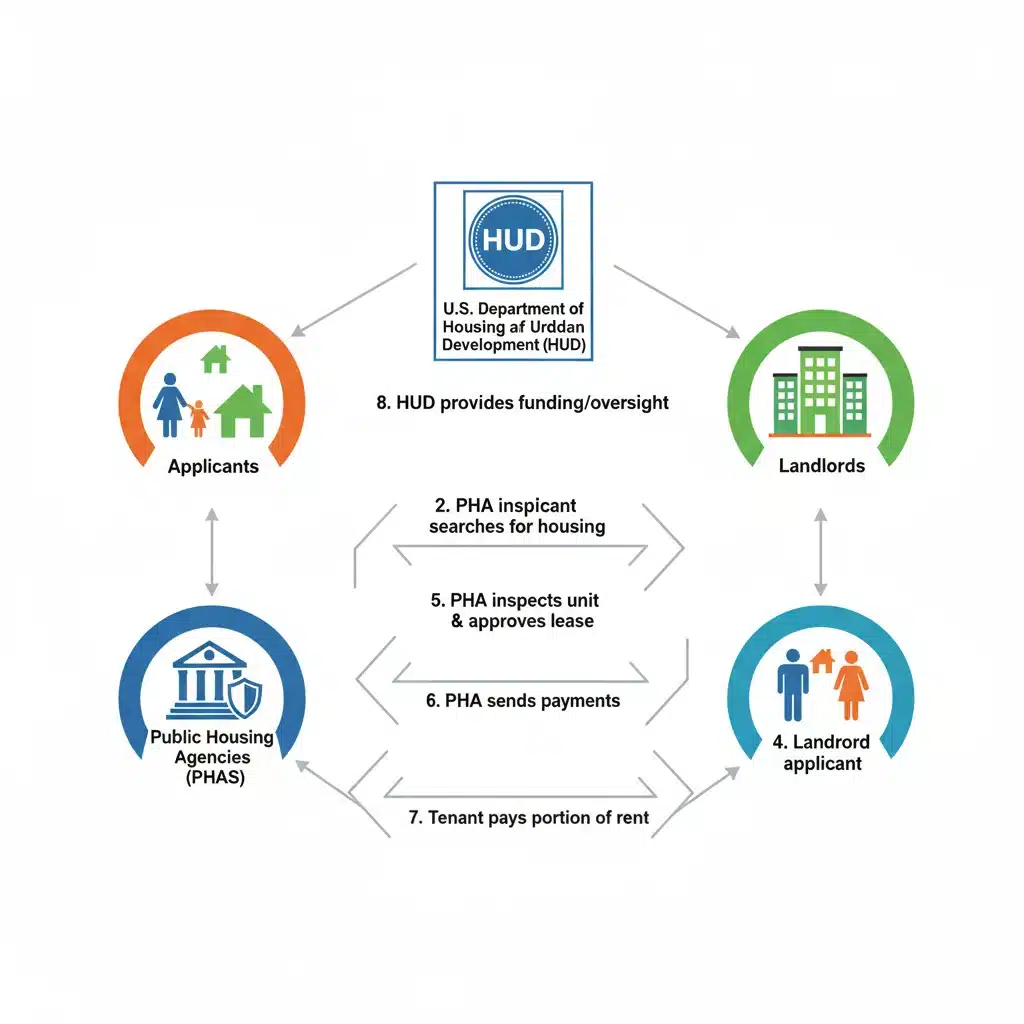
The U.S. Department of Housing and Urban Development (HUD) oversees the Section 8 Vouchers program, which aims to help very low-income families afford safe, decent, and sanitary housing in the private market. The program is administered locally by Public Housing Agencies (PHAs). While the core principles of Section 8 Vouchers remain consistent, yearly adjustments and local implementations can introduce variations. Our focus on 2026 will equip you with forward-thinking insights to prepare effectively.
Understanding the Foundation of Section 8 Vouchers
Before diving into the specifics of applying for Section 8 Vouchers in 2026, it’s essential to grasp the fundamental concepts of the program. The Housing Choice Voucher Program is the federal government’s largest program for assisting very low-income families, the elderly, and people with disabilities to afford decent, safe, and sanitary housing in the private market. Housing assistance is provided on behalf of the family or individual, and participants are able to find their own housing, including single-family homes, townhouses, and apartments. The participant is free to choose any housing that meets the requirements of the program and is not limited to units located in subsidized housing projects.
A housing subsidy is paid directly to the landlord by the PHA on behalf of the participating family. The family then pays the difference between the actual rent charged by the landlord and the amount subsidized by the program. This assistance is critical for preventing homelessness and ensuring housing stability for millions of Americans. The amount of subsidy is generally based on the family’s income and the local fair market rent for their area. This flexibility allows families to choose housing that best suits their needs and preferences, rather than being restricted to specific public housing units.
Key Definitions and Terms
- Public Housing Agency (PHA): These are local governmental or non-profit entities that administer the 8 Vouchers program at the local level. They process applications, determine eligibility, and manage the waiting list.
- Housing Choice Voucher: This is the official name for the Section 8 Vouchers. It’s a portable subsidy that allows participants to choose housing anywhere within the jurisdiction of the PHA that issued the voucher, and sometimes even portability to other areas.
- Fair Market Rent (FMR): Established by HUD, FMRs are used to determine payment standards for the Section 8 Vouchers program. They represent the amount that a modest, non-luxury rental unit should cost in a particular market area.
- Payment Standard: This is the maximum amount of rent that a PHA will subsidize for a given family size in a particular area. It is typically set between 90% and 110% of the FMR.
- Total Tenant Payment (TTP): Generally, families pay 30% of their adjusted monthly income for rent and utilities. The housing voucher program then covers the difference between the TTP and the payment standard.
Eligibility Requirements for Section 8 Vouchers in 2026
Eligibility for Section 8 Vouchers is primarily based on income and family size. While specific income limits can vary by location and are subject to change annually, the general guidelines set by HUD remain consistent. For 2026, applicants can expect these core criteria to be in place:
Income Limits
Your family’s income must not exceed 50% of the median income for the county or metropolitan area in which you choose to live. By law, 75% of new Section 8 Vouchers issued each year must go to families whose incomes do not exceed 30% of the area median income. These limits are updated annually by HUD and are specific to each geographic area. It’s crucial to check the most current income limits for your specific location when applying in 2026.
Family Definition
A ‘family’ can be broadly defined and is not limited to traditional nuclear families. It can include single persons, elderly persons, disabled persons, or a group of persons living together, often but not necessarily related by blood or marriage. The PHA will assess the family composition to determine appropriate voucher size and eligibility.
Citizenship and Immigration Status
Assistance is limited to U.S. citizens and specified categories of non-citizens who have eligible immigration status. At least one member of the household must meet these criteria for the family to be eligible for Section 8 Vouchers.
Other Eligibility Factors
PHAs will also consider other factors, such as:
- Eviction History: Applicants with a history of evictions from federally assisted housing for drug-related criminal activity may be denied.
- Criminal History: Serious criminal activity, particularly drug-related or violent crimes, can lead to disqualification.
- Previous Program Participation: If an applicant has been terminated from previous federal housing assistance programs for non-compliance, it could affect their eligibility.
It’s important to be transparent and provide accurate information during the application process to avoid delays or disqualification. PHAs will typically perform background checks to verify information.
The Application Process for Section 8 Vouchers in 2026
Applying for Section 8 Vouchers can be a lengthy process due to high demand and limited funding. It’s crucial to understand each step and be prepared for potential waiting periods. Here’s a general overview of what to expect when applying in 2026:
Step 1: Locate Your Local Public Housing Agency (PHA)
The first step is to identify and contact your local PHA. You can find a list of PHAs on the HUD website. Each PHA has its own application process, waiting list, and specific requirements, so it’s essential to connect with the one serving your desired residential area.
Step 2: Submit an Application
Most PHAs require applicants to complete a preliminary application. This application typically asks for basic information about your household, income, and assets. Some PHAs offer online applications, while others may require in-person submission or mail. Be prepared to provide:
- Names and birth dates of all household members.
- Social Security numbers for all household members.
- Proof of U.S. citizenship or eligible immigration status.
- Income information for all adult household members (pay stubs, benefit letters, etc.).
- Asset information (bank statements, property ownership, etc.).

Step 3: The Waiting List
Due to high demand, most PHAs have long waiting lists for Section 8 Vouchers. It is not uncommon for waiting lists to be closed for extended periods, sometimes years. When a waiting list opens, it is often for a limited time, and thousands of applications may be received. Some PHAs use a lottery system to select applicants from the initial pool. During this waiting period, it is vital to keep your contact information updated with the PHA. If they cannot reach you when your name comes up, you may lose your place.
Step 4: Interview and Verification
Once your name nears the top of the waiting list, the PHA will contact you for an interview. During this phase, you will need to provide detailed documentation to verify all the information you provided in your initial application. This includes:
- Birth certificates for all household members.
- Social Security cards for all household members.
- Proof of income (employment verification, tax returns, benefit statements).
- Asset verification (bank statements, property deeds).
- Landlord references.
- Criminal background checks.
The PHA will review all documentation to confirm your eligibility for Section 8 Vouchers. This is a critical step, and any discrepancies or false information can lead to disqualification.
Step 5: Voucher Issuance
If deemed eligible, you will be issued a housing choice voucher. This voucher will specify the maximum assistance the PHA will provide, based on your income and family size. You will also receive information on how to find suitable housing, your responsibilities as a program participant, and the PHA’s role.
Finding Housing with Section 8 Vouchers in 2026
Once you have received your Section 8 Vouchers, the next step is to find an apartment or house that meets the program’s requirements. This part of the process requires active participation and understanding of the rules.
Searching for a Unit
You are responsible for finding a suitable housing unit. The unit must meet the PHA’s housing quality standards (HQS) and the rent must be reasonable, as determined by the PHA. Many landlords are familiar with the Section 8 Vouchers program, but not all accept them. Resources for finding housing include:
- Online rental platforms (some have filters for Section 8).
- Local PHA listings or resources.
- Community housing organizations.
- Word of mouth and local advertising.
It’s important to communicate with potential landlords upfront that you have a Section 8 Vouchers. This can save time and streamline the process.
Request for Tenancy Approval (RFTA)
Once you find a unit you like and the landlord agrees to participate, the landlord must submit a Request for Tenancy Approval (RFTA) to the PHA. This document provides details about the unit, the proposed rent, and the lease terms.
Housing Quality Standards (HQS) Inspection
The PHA will then schedule an HQS inspection of the unit. This inspection ensures that the housing meets federal standards for health and safety. Common issues that might fail an HQS inspection include:
- Lack of working smoke detectors.
- Water leaks or plumbing issues.
- Unsafe electrical outlets or wiring.
- Pest infestations.
- Structural deficiencies.
If the unit fails the inspection, the landlord will be given a period to make necessary repairs. The unit must pass inspection before the Section 8 Vouchers assistance can begin.
Lease and Housing Assistance Payments (HAP) Contract
After the unit passes inspection and the rent is deemed reasonable, two contracts are signed:
- Lease Agreement: You and the landlord sign a lease for a minimum term of one year.
- Housing Assistance Payments (HAP) Contract: The PHA and the landlord sign a HAP contract. This contract specifies the amount of rent subsidy the PHA will pay directly to the landlord on your behalf.
At this point, you move into your new home, and the Section 8 Vouchers program begins to assist with your housing costs.
Responsibilities of Section 8 Vouchers Participants
Being a participant in the Section 8 Vouchers program comes with certain responsibilities. Adhering to these responsibilities is crucial for maintaining your assistance:
- Comply with Lease Terms: You must comply with the terms of your lease, just like any other tenant. This includes paying your portion of the rent on time, maintaining the unit, and not engaging in illegal activities.
- Report Changes in Income or Family Size: Any changes in your household income or family composition must be reported to the PHA promptly. Failure to do so can result in overpayment or underpayment of assistance, potentially leading to termination.
- Allow for Inspections: You must allow the PHA to inspect the unit periodically to ensure it continues to meet HQS.
- Maintain the Unit: You are responsible for keeping your unit clean and in good condition, and for any damages beyond normal wear and tear.
- Not Engage in Criminal Activity: Engaging in drug-related criminal activity or other violent criminal activity can lead to immediate termination from the program.
Understanding and fulfilling these responsibilities ensures a smooth and continued benefit from your Section 8 Vouchers.
Portability of Section 8 Vouchers
One of the significant advantages of the Housing Choice Voucher program is its portability. This means that if you are issued a Section 8 Vouchers by one PHA, you may be able to use it to move to another area, provided that the new area has a PHA that administers the voucher program. This flexibility offers participants the opportunity to move for employment, family reasons, or to access better schools or services.
The process of porting your voucher typically involves notifying your initial PHA of your intent to move. They will then transfer your voucher and relevant documentation to the PHA in your desired new location. It’s important to understand that the rules and availability of housing can vary between different PHA jurisdictions, so it’s advisable to research the new area’s PHA policies before porting your voucher.
Updates and Considerations for Section 8 Vouchers in 2026
While the core structure of Section 8 Vouchers is stable, federal and local policies are always subject to change. As we approach 2026, here are some areas to keep an eye on:
Funding Levels and Availability
The availability of Section 8 Vouchers is directly tied to federal funding. Advocacy efforts and legislative priorities can impact the number of vouchers issued. Staying informed about HUD’s budget proposals and congressional appropriations can provide insight into future program capacity.
Technological Advancements in Application and Management
PHAs are increasingly adopting technology to streamline applications and program management. Expect more online portals, digital document submission, and potentially even virtual inspections. Familiarizing yourself with these tools can make the application process more efficient.
Fair Housing and Discrimination Protections
Fair housing laws continue to evolve, with ongoing efforts to combat discrimination against voucher holders. In some jurisdictions, source of income discrimination is explicitly prohibited, meaning landlords cannot refuse to rent to you simply because you use a Section 8 Vouchers. Be aware of your rights and report any instances of discrimination to the appropriate authorities.
Impact of Economic Conditions
Economic conditions, such as inflation and rising housing costs, can influence FMRs and payment standards. These adjustments are made to ensure that Section 8 Vouchers remain effective in helping families afford housing in their local markets. Keep an eye on local housing market trends as they can impact the practical value of your voucher.
Common Challenges and How to Overcome Them
Despite the invaluable assistance provided by Section 8 Vouchers, participants often face challenges. Being prepared can help you navigate these hurdles effectively:
Long Waiting Lists
As mentioned, waiting lists can be extremely long. To mitigate this:
- Apply to multiple PHAs if possible, especially those in less competitive areas.
- Keep your contact information updated with all PHAs you’ve applied to.
- Explore other housing assistance programs in the interim, such as state or local rental assistance.
Finding a Landlord
Some landlords are hesitant to accept Section 8 Vouchers. To improve your chances:
- Be a proactive and reliable applicant. Have all your documentation ready.
- Highlight your strengths as a tenant (e.g., stable rental history, good references).
- Educate landlords on the benefits of the program, such as guaranteed rent payments from the PHA.
- Look for landlords who explicitly advertise as accepting Section 8 Vouchers.
Housing Quality Standards (HQS) Issues
Units may fail HQS inspections, delaying your move-in. To minimize this:
- When viewing units, look for obvious signs of disrepair or safety hazards.
- Communicate openly with the landlord about potential HQS issues before the inspection.
- Be patient and persistent; the PHA and landlord are working to ensure your housing is safe.
Understanding Program Rules
The rules of the Section 8 Vouchers program can be complex. To ensure compliance:
- Read all communications from your PHA carefully.
- Don’t hesitate to ask your PHA representative for clarification on any rules or procedures.
- Keep detailed records of all interactions and documents related to your voucher.
The Future of Section 8 Vouchers and Affordable Housing
The demand for affordable housing continues to outpace supply across much of the United States. The Section 8 Vouchers program remains a critical tool in addressing this crisis. As we move towards 2026 and beyond, there is ongoing discussion and potential for reforms and expansions to federal housing assistance programs. These could include:
- Increased Funding: Advocates consistently push for higher appropriations to expand the number of available Section 8 Vouchers.
- Program Simplification: Efforts to streamline the application and management processes could make the program more accessible for both tenants and landlords.
- Integration with Support Services: Greater integration of housing assistance with other support services, such as job training, childcare, and healthcare, could improve overall outcomes for participants.
- Addressing Homelessness: Enhanced utilization of Section 8 Vouchers as a primary tool to reduce chronic homelessness is a key policy goal.
Staying engaged with housing advocacy groups and local community organizations can provide valuable insights into these potential changes and how they might impact the Section 8 Vouchers program.
Conclusion: Securing Your Housing Future with Section 8 Vouchers in 2026
The Section 8 Vouchers program is a cornerstone of federal housing assistance, offering a lifeline to millions seeking affordable and safe housing. While the process can be complex and demand often exceeds supply, understanding the eligibility requirements, application steps, and participant responsibilities is key to successfully navigating the system.
As you prepare for 2026, remember to:
- Research Your Local PHA: Each agency has specific procedures.
- Gather All Documentation: Be thorough and accurate in your application.
- Be Patient and Persistent: The waiting lists can be long, but your persistence can pay off.
- Understand Your Responsibilities: Compliance is crucial for maintaining your assistance.
- Stay Informed: Keep abreast of any changes in federal or local housing policies.
By taking these steps, you can significantly improve your chances of securing a Section 8 Vouchers and achieving housing stability. The journey may require dedication, but the reward of a safe and affordable home is immeasurable. We hope this guide provides you with the knowledge and confidence to pursue federal housing assistance effectively in 2026 and beyond.