Roth IRA Conversion: 2025 Financial Planning Analysis

Is a Roth IRA conversion right for you in 2025? This analysis explores the financial factors and tax implications to consider when deciding whether to convert a traditional IRA to a Roth IRA, helping you make an informed financial planning decision.
Deciding whether a Roth IRA conversion is the right move for your financial future requires careful consideration. Let’s delve into whether a Roth IRA conversion in 2025 aligns with your financial goals.
Understanding Roth IRA Conversions
A Roth IRA conversion involves transferring funds from a traditional IRA to a Roth IRA. While this can offer significant tax advantages, it’s essential to understand the nuances before making the switch.
Converting a traditional IRA to a Roth IRA means you’ll pay income tax on the converted amount in the year of the conversion. In exchange, your qualified withdrawals in retirement will be tax-free. This can be a powerful tool for managing taxes and maximizing your retirement savings.
Key Differences Between Traditional and Roth IRAs
Understanding the core differences between these retirement accounts is crucial for determining if a conversion is right for you.
- Traditional IRA: Contributions may be tax-deductible, and earnings grow tax-deferred. However, withdrawals in retirement are taxed as ordinary income.
- Roth IRA: Contributions are made with after-tax dollars, but qualified withdrawals in retirement, including earnings, are tax-free.
The choice between a traditional and Roth IRA depends on your current and future tax situation. If you anticipate being in a higher tax bracket in retirement, a Roth IRA conversion may be beneficial.
A Roth IRA can offer tax-free growth, which is a great advantage. But understanding the tax of converting it in the present is important, the conversion tax implications in the present shouldn’t be ignored or taken too lightly.
Factors to Consider Before Converting
Several factors should influence your decision on whether to convert to a Roth IRA. Evaluating these factors can help you determine if this strategy aligns with your overall financial plan.
When evaluating whether a Roth IRA conversion makes sense for your unique situation, it is essential to understand various individual and financial components.

Your Current and Future Tax Bracket
One of the most critical factors is your current and projected tax bracket. Converting during a low-income year can minimize the tax impact.
If you expect to be in a higher tax bracket in retirement, paying taxes on the converted amount now may be more advantageous than paying taxes on withdrawals later. On the other hand, if you expect to be in a lower tax bracket, a conversion may not be as beneficial.
Your Age and Timeline to Retirement
Your age and how close you are to retirement also play a significant role. Younger individuals have more time to benefit from the tax-free growth of a Roth IRA.
For those closer to retirement, the immediate tax impact of a conversion needs to be carefully weighed against the potential long-term benefits. Consulting with a financial advisor can provide personalized guidance.
Your retirement timeline plays an important role. If you have a shorter time before retiring, assess your finances carefully.
Potential Benefits of a Roth IRA Conversion
Converting to a Roth IRA can offer several compelling benefits, particularly for those focused on long-term financial security and tax efficiency.
One of the main benefits is the tax-free income possibility after retiring. However, this is only one of the benefits of a Roth IRA conversion.
Let’s have a look at some other potential benefits of a Roth IRA conversion:
- Tax-Free Withdrawals in Retirement: Qualified withdrawals from a Roth IRA are entirely tax-free, providing a predictable income stream.
- No Required Minimum Distributions (RMDs): Unlike traditional IRAs, Roth IRAs are not subject to RMDs during the original owner’s lifetime, allowing for greater flexibility.
- Estate Planning Advantages: Roth IRAs can be a valuable asset for estate planning, as they can be passed on to heirs tax-free.
For those aiming to minimize their tax burden in retirement and leave a tax-advantaged inheritance, a Roth IRA conversion can be a strategic move.
The tax-free withdrawals can prove helpful as inflation raises the price of most commodities. A Roth IRA conversion may be worth it to assess to prepare your finances.
The Tax Implications of Converting
Understanding the tax implications is paramount when considering a Roth IRA conversion. The conversion process is taxable, and careful planning is required to avoid unexpected tax liabilities.
When planning for the long term for your retirement, evaluating tax changes can affect the growth of your money. Proper tax planning is essential in this case.
How the Conversion is Taxed
The amount converted from a traditional IRA to a Roth IRA is considered taxable income in the year of the conversion. This can potentially push you into a higher tax bracket.
It’s crucial to estimate the tax impact accurately and have a strategy for paying the taxes. Some options include using funds from outside the IRA or making estimated tax payments throughout the year.
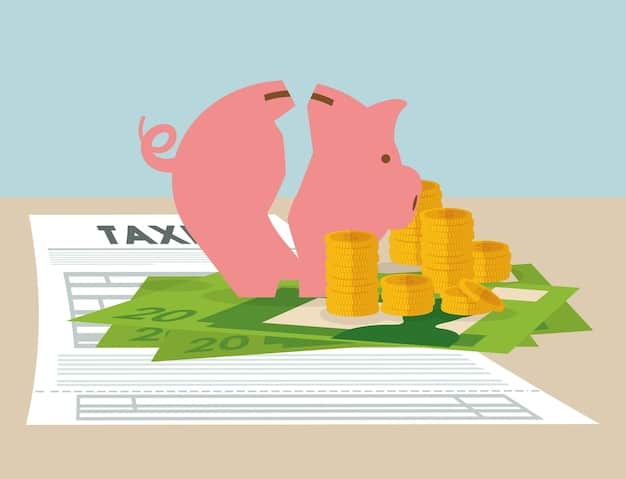
Strategies for Managing the Tax Bill
Several strategies can help manage the tax bill associated with a Roth IRA conversion. These tactics can help minimize the financial strain of the conversion.
- Convert Smaller Amounts Over Time: Spreading the conversion over several years can help avoid a significant tax hit in any single year.
- Offset the Tax Bill with Deductions: Maximize deductions and credits to reduce your overall taxable income.
- Avoid Withholding from the IRA: Paying taxes from outside the IRA allows the converted funds to continue growing tax-free.
Careful planning and execution are essential to navigate the tax implications of a Roth IRA conversion successfully.
A plan for taxes is essential. Do not allow yourself to be too optimistic and convert all money to a Roth IRA without having a plan to pay the taxes for the Roth IRA.
Scenarios Where a Conversion Makes Sense
Certain scenarios make a Roth IRA conversion particularly attractive. These situations often involve specific financial circumstances or long-term goals.
These situations involve specific financial situations. It is essential to keep track of your finances to know which situation would suit your present financial circumstances.
Early Retirement or Sabbatical
If you’re planning an early retirement or sabbatical with lower income, converting to a Roth IRA during those years can minimize the tax impact.
Lower income means you’re in a lower tax bracket, making it an ideal time to convert without incurring a hefty tax bill. This strategy can set you up for tax-free withdrawals in your later years of retirement.
Inherited IRA Considerations
If you’ve inherited a traditional IRA, converting it to a Roth IRA can provide significant tax advantages. However, the rules for inherited IRAs can be complex, so it’s important to consult with a financial advisor.
Converting an inherited IRA can help manage the tax burden and provide greater control over the assets. Make sure to understand the potential tax implications before proceeding.
These circumstances and situations show the importance of financial knowledge. Keeping abreast or consulting with a financial advisor can help in your financial planning.
Potential Downsides and Risks
While Roth IRA conversions offer numerous benefits, it’s essential to be aware of the potential downsides and risks involved. A comprehensive understanding can help you make an informed decision.
Being fully aware of possible problems can lead to better planning of the financial conversions.
- Paying Taxes Upfront: The immediate tax liability can be a significant disadvantage, especially if you’re not prepared for the expense.
- Market Fluctuations: If the value of your investments declines after conversion, you’ve paid taxes on a higher amount than the current value.
- Reconversion Restrictions: Once you convert, you cannot “reconvert” back to a traditional IRA, so the decision is generally irreversible.
Carefully weighing these potential downsides against the benefits can help you decide if a Roth IRA conversion is right for you.
These risks are not to be taken lightly because your retirement plans need careful planning.
| Key Aspect | Brief Description |
|---|---|
| ✅ Tax-Free Growth | Roth IRAs offer tax-free growth and withdrawals in retirement. |
| 💰 Tax Implications | Converting requires paying income taxes on the converted amount. |
| 📈 Future Tax Bracket | Consider your expected tax bracket in retirement. |
| 🗓️ Conversion Timing | Converting in a low-income year can minimize tax impact. |
Frequently Asked Questions
▼
A Roth IRA conversion involves moving funds from a traditional IRA to a Roth IRA. You’ll pay income taxes on the converted amount in the year of the conversion, but qualified withdrawals in retirement will be tax-free.
▼
Potential benefits include tax-free withdrawals during retirement, no required minimum distributions during your lifetime, and potential estate planning advantages. However, understanding the conversion tax implications is a must.
▼
The amount converted from a traditional IRA to a Roth IRA is taxed as ordinary income in the year of the conversion. This can potentially push you into a higher tax bracket, so plan accordingly.
▼
A conversion often makes sense when you expect to be in a higher tax bracket in retirement, anticipate lower income in the conversion year, or want to leave a tax-advantaged inheritance for your heirs.
▼
Potential downsides include paying taxes upfront on the converted amount, market fluctuations affecting investment values, and the inability to “reconvert” back to a traditional IRA if circumstances change.
Conclusion
Deciding whether a Roth IRA conversion is right for you requires a thorough analysis of your financial situation, tax implications, and long-term goals. By carefully considering these factors and consulting with a financial professional, you can make an informed decision that aligns with your retirement planning objectives for 2025 and beyond.