Reskilling for Automation: Your 6-Month Plan to Future-Proof Your Career

Reskilling for Automation: Your 6-Month Plan to Future-Proof Your Career
The landscape of work is undergoing a seismic shift, largely driven by the relentless march of automation and artificial intelligence (AI). What was once science fiction is now an everyday reality, with machines and algorithms increasingly performing tasks previously handled by humans. This transformation, while daunting to some, presents an unprecedented opportunity for those willing to adapt and acquire new skills. The key to thriving in this evolving environment is effective reskilling for automation. This comprehensive guide outlines a strategic 6-month plan to help you navigate this transition, identify high-demand roles, and secure your place in the future workforce.
Understanding the Automation Revolution and Its Impact
Before diving into a reskilling plan, it’s crucial to grasp the profound impact of automation on various industries. Automation isn’t just about robots on assembly lines; it encompasses a vast array of technologies, including machine learning, robotic process automation (RPA), natural language processing (NLP), and advanced data analytics. These technologies are streamlining operations, enhancing efficiency, and, in many cases, fundamentally changing job descriptions.
Jobs that involve repetitive, predictable tasks are most susceptible to automation. This includes many administrative roles, manufacturing positions, and even aspects of customer service. However, automation also creates new jobs and augments existing ones, demanding a different set of human-centric skills. Understanding this duality is the first step in successful reskilling for automation.
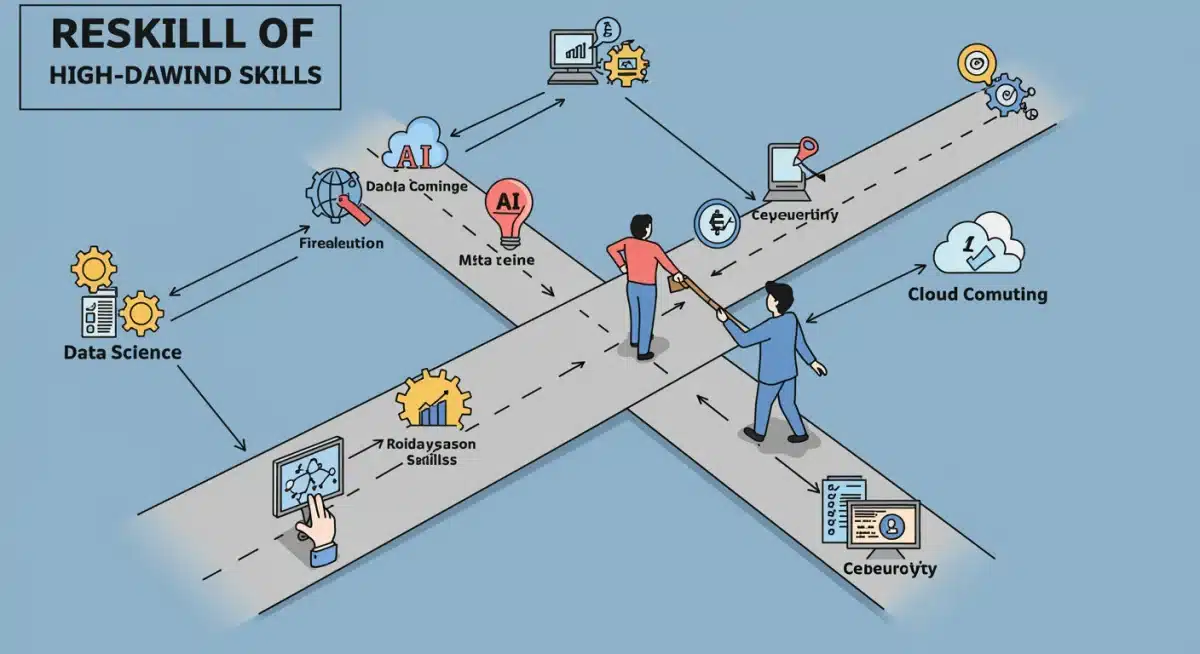
The World Economic Forum consistently highlights the growing skills gap, projecting that millions of jobs will be displaced by automation, while millions of new ones will be created. The demand for roles in areas like AI and machine learning specialists, data scientists, digital marketing and strategy specialists, process automation specialists, and cybersecurity professionals is skyrocketing. This isn’t a threat; it’s an invitation to evolve.
Why Reskilling for Automation is Non-Negotiable
In today’s dynamic job market, continuous learning is no longer a luxury but a necessity. The shelf life of skills is shrinking, meaning that what you learned five or ten years ago might not be sufficient for the demands of tomorrow. Reskilling for automation ensures that your professional toolkit remains relevant and valuable. It’s about proactively preparing for the future, rather than reacting to changes once they’ve already occurred.
Beyond job security, reskilling offers numerous benefits:
- Enhanced Employability: Acquiring in-demand skills makes you a more attractive candidate for new and emerging roles.
- Higher Earning Potential: Specialized skills in fields like AI and data science often command higher salaries.
- Career Advancement: Reskilling can open doors to leadership positions and more complex, strategic roles.
- Increased Adaptability: The process of learning new skills fosters a growth mindset, making you more resilient to future changes.
- Personal Growth: Embracing new challenges and mastering new domains contributes to personal satisfaction and intellectual development.
Ignoring the need for reskilling for automation risks obsolescence. Companies are increasingly investing in automation technologies, and they need employees who can build, manage, and work alongside these systems.
The 6-Month Reskilling Plan: A Detailed Roadmap
This 6-month plan is structured to provide a clear, actionable roadmap for individuals committed to adapting their careers for the age of automation. Each month builds upon the previous one, ensuring a steady progression towards your reskilling goals.
Month 1: Self-Assessment and Goal Setting
The first month is dedicated to introspection and strategic planning. You can’t chart a course without knowing your starting point and desired destination.
1. Identify Your Current Skill Set:
- Hard Skills: List all technical skills you possess (e.g., programming languages, software proficiency, data analysis tools).
- Soft Skills: Document your transferable skills (e.g., critical thinking, problem-solving, communication, creativity, adaptability). These are often highly valued in automated environments, as machines excel at repetitive tasks, leaving complex, human-centric challenges to people.
- Industry Knowledge: What unique insights do you have about your current industry? This can be a significant advantage in applying new skills contextually.
2. Research High-Demand Roles:
Explore job market trends. Look at reports from LinkedIn, Glassdoor, the World Economic Forum, and industry-specific analyses. Focus on roles that are emerging or experiencing significant growth due to automation. Examples include:
- Data Scientist / Analyst
- Machine Learning Engineer
- AI Specialist
- Robotic Process Automation (RPA) Developer/Analyst
- Cloud Computing Specialist (Azure, AWS, GCP)
- Cybersecurity Analyst
- UX/UI Designer (for AI-powered interfaces)
- Digital Marketing Specialist (with AI tools)
- Prompt Engineer (for generative AI)
3. Pinpoint Your Target Role(s):
Based on your existing skills, interests, and market demand, select one to three target roles that appeal to you. Don’t be afraid to consider a pivot. The essence of reskilling for automation is embracing change.
4. Identify Skill Gaps:
Compare the skills required for your target roles with your current skill set. This will reveal the specific areas where you need to focus your learning. For instance, if you aim to be a Data Scientist but lack Python proficiency, that’s a clear skill gap.
5. Set SMART Goals:
Define Specific, Measurable, Achievable, Relevant, and Time-bound goals for your reskilling journey. For example: "By the end of Month 3, I will complete an introductory Python course and build a basic data analysis project."
Month 2: Foundational Learning – Building the Base
With your goals set, Month 2 is all about building the essential foundational knowledge required for your chosen path.
1. Choose Your Learning Platform(s):
There’s a wealth of online resources. Consider platforms like:
- Coursera/edX: For structured courses, specializations, and certifications from top universities.
- Udemy/Pluralsight: For practical, project-based learning and in-depth tutorials.
- LinkedIn Learning: For a wide range of business, tech, and creative skills.
- FreeCodeCamp/Kaggle: For coding practice and data science challenges.
- Official Documentation: For specific tools and technologies (e.g., AWS documentation, TensorFlow guides).
2. Master Core Concepts:
Depending on your target role, this might involve:
- Programming Fundamentals: Python is often a universal starting point for AI, data science, and automation.
- Data Basics: Understanding databases (SQL), data structures, and basic statistics.
- Cloud Computing Essentials: Familiarity with at least one major cloud provider (AWS, Azure, GCP) is increasingly vital.
- Automation Principles: Grasping the concepts behind RPA, AI, and machine learning.
3. Dedicate Consistent Study Time:
Treat your reskilling like a part-time job. Dedicate at least 10-15 hours per week to learning. Consistency is more important than sporadic long sessions.
Month 3: Deep Dive into Specialized Skills
Having established a strong foundation, Month 3 focuses on delving deeper into the specialized skills directly relevant to your target role.
1. Advanced Coursework:
Enroll in more advanced courses or specializations. For a Data Scientist, this might be a course on machine learning algorithms or advanced SQL. For an RPA Developer, it could be a certification in UiPath or Automation Anywhere.
2. Practical Application through Projects:
Learning theory is important, but practical application is paramount. Start working on small projects. These could be:
- Analyzing a publicly available dataset.
- Building a simple automation script.
- Creating a basic machine learning model.
- Developing a small web application with a cloud backend.
These projects are crucial for solidifying your understanding and building a portfolio.
3. Network and Engage:
Join online communities, forums, and local meetups related to your chosen field. Engage with other learners and professionals. Ask questions, share your progress, and seek advice. Networking is a powerful tool for reskilling for automation.
Month 4: Portfolio Building and Certification
Month 4 is about transforming your acquired knowledge into tangible evidence of your capabilities.
1. Develop a Strong Portfolio:
Your portfolio is your resume in the world of tech and automation. Showcase 3-5 of your best projects. For each project, include:
- A clear problem statement.
- The technologies and methods you used.
- Your code (e.g., on GitHub).
- The results and insights gained.
- A brief explanation of your thought process.
Platforms like GitHub, Kaggle, or personal websites are excellent for hosting your portfolio.
2. Pursue Relevant Certifications:
Certifications from recognized bodies can significantly boost your credibility. Examples include:
- Google Professional Data Engineer
- Microsoft Certified: Azure AI Engineer Associate
- AWS Certified Cloud Practitioner
- UiPath Certified RPA Developer
- CompTIA Security+ (for cybersecurity)
While not always mandatory, certifications demonstrate a validated skill set to potential employers.
3. Continue Learning and Practicing:
Even as you build your portfolio, keep practicing coding, solving problems, and exploring new concepts. The field of automation is constantly evolving.
Month 5: Refine and Apply – Resume, LinkedIn, and Practice Interviews
With skills and a portfolio in hand, Month 5 focuses on presenting yourself effectively to the job market.
1. Optimize Your Resume and LinkedIn Profile:
- Tailor your resume: Highlight your newly acquired skills, projects, and certifications. Use keywords from job descriptions for your target roles.
- Update LinkedIn: Reflect your new skills, education, and professional interests. Connect with people in your target industry.
- Write a compelling summary: Clearly articulate your career transition and your passion for your new field.
2. Practice Interview Skills:
Technical roles often involve technical interviews. Practice:
- Coding challenges: Use platforms like LeetCode or HackerRank.
- Behavioral questions: Prepare to discuss your problem-solving process, teamwork, and how you handle challenges.
- Case studies: Some roles might involve practical scenarios.
Seek mock interviews with mentors or peers to get constructive feedback. Understanding how to articulate your journey of reskilling for automation is crucial.
3. Start Applying for Jobs:
Begin actively seeking entry-level or junior positions in your target field. Don’t be discouraged by initial rejections; view them as learning opportunities.
Month 6: Job Search Acceleration and Continuous Improvement
The final month is about intensifying your job search and committing to lifelong learning.
1. Network Actively:
Attend virtual career fairs, industry conferences, and workshops. Leverage your LinkedIn network. Informational interviews can provide valuable insights and connections.
2. Tailor Applications:
Customize each application to the specific job description. Show how your unique background, combined with your new skills, makes you an ideal candidate.
3. Showcase Soft Skills:
Emphasize skills like adaptability, problem-solving, critical thinking, and communication. These are increasingly important as automation handles more routine tasks.
4. Consider Internships or Freelance Work:
If direct employment is proving challenging, consider internships, apprenticeships, or even freelance projects to gain real-world experience. This can be a powerful bridge to full-time employment and further solidify your reskilling for automation efforts.
5. Embrace Lifelong Learning:
The 6-month plan is a starting point, not an end. The world of automation is constantly evolving, so commit to continuous learning. Stay updated with new technologies, tools, and best practices in your chosen field.
Key Skills for Success in an Automated World
While specific technical skills vary by role, certain core competencies are universally valuable for successful reskilling for automation:
- Critical Thinking and Problem Solving: Machines can execute, but humans must define the problems and critically evaluate solutions.
- Creativity and Innovation: Developing new ideas, products, and services that automation can then help scale.
- Digital Literacy and Data Fluency: Understanding how to work with data, interpret insights, and use digital tools effectively.
- Adaptability and Resilience: The ability to learn new things quickly and bounce back from challenges.
- Collaboration and Communication: Working effectively in diverse teams, often alongside AI tools.
- Emotional Intelligence: Understanding and managing emotions, both your own and others’, which is crucial for leadership and client-facing roles.
- Ethical AI and Data Governance: As AI becomes more pervasive, understanding its ethical implications and ensuring responsible use is critical.
These human-centric skills are precisely what automation cannot replicate, making them indispensable in the future workforce.

Overcoming Challenges in Your Reskilling Journey
Reskilling for automation is not without its hurdles. You might encounter:
- Time Constraints: Juggling learning with existing work and personal commitments. Prioritization and time management are key.
- Financial Investment: While many resources are free or affordable, some certifications and advanced courses can be costly. Look for scholarships, employer-sponsored programs, or free alternatives where possible.
- Motivation Dips: Learning new, complex skills can be frustrating. Break down goals into smaller, manageable steps. Celebrate small victories.
- Imposter Syndrome: Feeling like you don’t belong in a new field is common. Remember that everyone starts somewhere. Focus on your progress and learning.
- Information Overload: The sheer volume of learning resources can be overwhelming. Stick to your chosen path and avoid getting sidetracked.
Remember that millions of people worldwide are undertaking similar journeys. You are not alone. Leverage online communities, mentors, and support networks to stay motivated and overcome obstacles.
The Role of Companies in Reskilling
It’s worth noting that progressive companies are also heavily investing in reskilling for automation programs for their existing workforce. They recognize that it’s often more cost-effective to upskill current employees who already understand the company culture and industry than to hire entirely new talent. If you are currently employed, explore whether your company offers internal training, tuition reimbursement, or partnerships with learning platforms. This can significantly ease your reskilling journey.
Conclusion: Embrace the Future with Confidence
The rise of automation is not a harbinger of doom for human labor, but rather a catalyst for evolution. By strategically investing in reskilling for automation, you can transform potential threats into unparalleled opportunities. This 6-month plan provides a structured, actionable framework to guide you through this exciting transition. It demands dedication, perseverance, and a commitment to lifelong learning, but the rewards – a future-proof career, enhanced employability, and personal growth – are immeasurable.
Start today. Assess your skills, identify your target roles, and embark on your reskilling journey. The future of work is not something that happens to you; it’s something you actively shape. By taking control of your learning and development, you can confidently step into the automated future, equipped with the skills and mindset to thrive.
Embrace the challenge, stay curious, and continue to build your capabilities. Your career in the age of automation awaits.