Quantum computing forecasts: the future of technology

Quantum computing forecasts indicate that this cutting-edge technology will revolutionize industries by enabling faster data processing, enhancing cybersecurity, and accelerating drug discovery while also facing significant development challenges.
Quantum computing forecasts suggest a shift in how we solve complex problems. As this technology evolves, it may revolutionize industries from healthcare to finance. Let’s dive into what this means for our future.
Understanding quantum computing
Understanding quantum computing is essential as this technology revolutionizes how we process information. Unlike classical computers, which use bits as the smallest unit of data, quantum computers operate with quantum bits, or qubits. This allows them to perform complex calculations at unprecedented speeds.
What are Qubits?
Qubits have unique properties that set them apart. While classical bits can represent a state of either 0 or 1, qubits can exist in multiple states simultaneously, thanks to superposition. This characteristic enables quantum computers to tackle multiple problems at once.
Key Principles of Quantum Computing
There are several key principles that drive quantum computing:
- Superposition: Allows qubits to be in multiple states at the same time.
- Entanglement: A phenomenon where qubits become interconnected, allowing one qubit’s state to depend on another’s.
- Quantum interference: Used to amplify correct paths while canceling out wrong ones during computation.
These principles enable quantum computers to solve problems that are currently infeasible with traditional technology. For example, they can quickly factor large numbers, which is critical for cryptography.
As research progresses, we anticipate that understanding quantum computing will not only enhance fields like artificial intelligence and big data but also bring breakthroughs in medicine, materials science, and beyond. The journey of mastering this technology will undoubtedly reshape our world.
Key predictions for the future

Exploring the key predictions for the future of quantum computing reveals exciting possibilities. As this technology advances, we can expect major transformations across various industries. The implications regarding data processing, security, and more are profound.
Advancements in Quantum Computing
Experts forecast immense strides in quantum computing capabilities within the next decade. We can look forward to:
- Faster problem-solving: Quantum computers will tackle tasks that conventional computers find challenging.
- Improved optimization: Industries like logistics and finance will benefit from enhanced resource allocation.
- Revolutionized drug discovery: The healthcare sector will experience breakthroughs in finding new treatments.
As quantum algorithms become more refined, their ability to analyze vast data sets will drastically improve accuracy and speed. This development can lead to significant changes in fields such as climate modeling and financial forecasting.
Impact on Cybersecurity
Another critical area impacted by quantum computing is cybersecurity. As quantum machines become mainstream, they have the potential to break conventional encryption methods. This poses challenges and opportunities for developing quantum-based security protocols.
Organizations are already exploring ways to transition to quantum-safe cryptography. These techniques will be vital to protect data against the capabilities of future quantum computers. By predicting these changes, businesses can better prepare for secure operations in a quantum era.
In conclusion, the predictions for quantum computing’s future are both exciting and daunting. By staying informed, we can anticipate and adapt to the upcoming changes that will shape our technological landscape.
Potential applications and impacts
The potential applications and impacts of quantum computing are vast and transformative. As this technology matures, it promises to reshape various sectors by improving efficiency, security, and innovation.
Applications Across Industries
One significant area for quantum computing is pharmaceutical development. By simulating molecular interactions at a quantum level, researchers can discover new drugs more efficiently than current methods allow.
- Finance: Quantum algorithms can analyze market trends and optimize trading strategies, leading to more profitable investments.
- Logistics: Quantum computing can enhance supply chain management, improving route planning and reducing costs.
- Energy: Optimizing energy distribution and discovery of new materials for batteries can lead to cleaner energy solutions.
Another critical application is in artificial intelligence. Quantum computing can accelerate machine learning processes, allowing systems to learn from data at unprecedented speeds. This can lead to improved decision-making and problem-solving capabilities in various fields.
Impacts on Society
The societal impacts of quantum computing are enormous. For instance, in cryptography, quantum computers could potentially break existing encryption methods, threatening data security across the globe. This challenge will drive innovation in developing quantum-resistant encryption algorithms.
Moreover, as quantum technologies improve, we may see advancements in personalized medicine. By analyzing vast amounts of genetic data, treatment plans can be tailored to individual patients, enhancing outcomes and reducing costs.
Overall, the applications and impacts of quantum computing extend far beyond simple calculations. The technology has the potential to address some of humanity’s most pressing challenges, making it a key area for future research and investment.
Challenges in quantum computing development
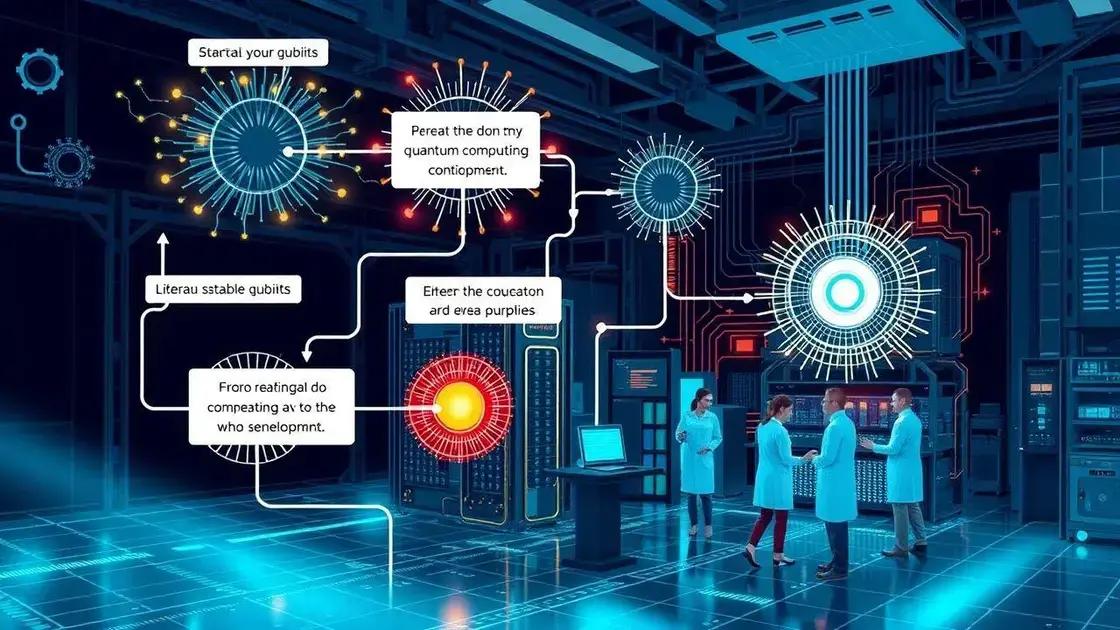
There are several challenges in quantum computing development that researchers and engineers must address. This technology, while promising, faces significant barriers that can hinder its progress.
Technical Limitations
One of the most pressing issues is maintaining the stability of qubits. Qubits are highly sensitive to their environment, and even the slightest disturbance can lead to errors in calculations. This phenomenon is known as quantum decoherence, and it complicates the development of reliable quantum systems.
Another challenge is the scalability of quantum systems. Current quantum computers have a limited number of qubits. Increasing this number while maintaining performance and error rates is a significant hurdle that scientists are working to overcome.
Resource and Infrastructure Needs
The infrastructure required to build quantum computers is also a concern. Quantum systems often need very low temperatures to operate. This requires specialized facilities and equipment that are costly and complex. Developing these technologies requires both funding and innovation.
Additionally, there is a need for skilled professionals in the field. The complexity of quantum mechanics makes it necessary for scientists and engineers to have a deep understanding of this area. The shortage of trained experts can slow down advances in quantum computing technology.
Lastly, ethical considerations and the implications of quantum computing, especially in areas like cryptography, also pose challenges for its development and regulation. Addressing these ethical questions is crucial as we advance in this field.
FAQ – Frequently Asked Questions about Quantum Computing
What is quantum computing?
Quantum computing is a type of computing that uses quantum bits, or qubits, which can exist in multiple states simultaneously, enhancing processing power.
How does quantum computing impact cybersecurity?
Quantum computing has the potential to break traditional encryption methods, making it essential to develop quantum-resistant security protocols.
What are some applications of quantum computing?
Quantum computing can be applied in fields like drug discovery, financial modeling, logistics optimization, and artificial intelligence.
What challenges does quantum computing face?
Quantum computing faces challenges such as maintaining qubit stability, scalability issues, and a shortage of skilled professionals in the field.