Higher Education in 2026: Online vs. In-Person Outcomes
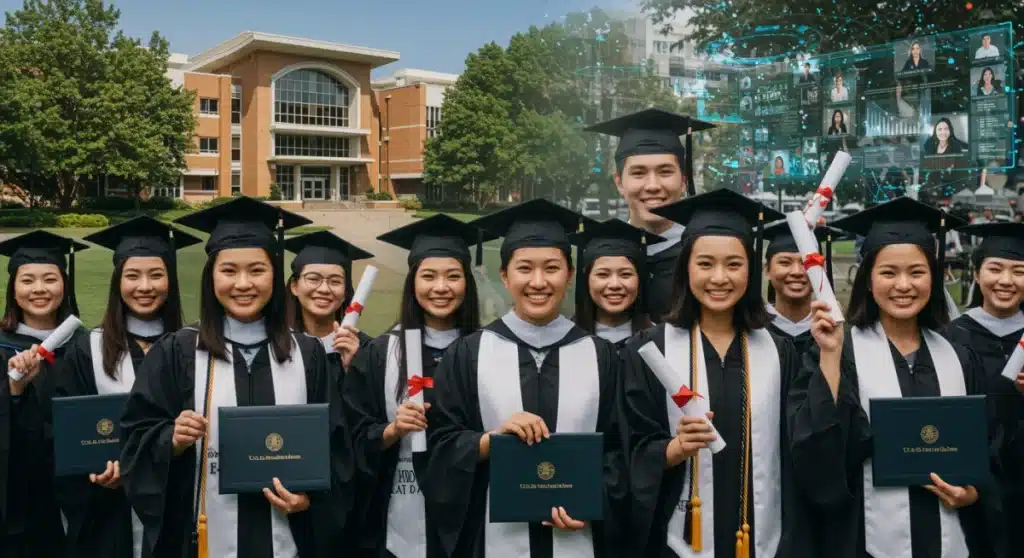
A comparative analysis of online versus in-person learning outcomes for U.S. graduates in 2026 reveals nuanced differences and converging strengths in academic performance, skill acquisition, and career trajectory.
The landscape of higher education in 2026 is a dynamic tapestry, continually reshaped by technological advancements and societal shifts. As we delve into a comprehensive Higher Education in 2026: A Comparative Analysis of Online vs. In-Person Learning Outcomes for U.S. Graduates, we aim to understand how these distinct educational modalities impact student success and career readiness.
The Evolving Educational Landscape in 2026
In 2026, the discussion around higher education is more complex than ever. The pandemic-induced acceleration of digital learning has cemented online education as a permanent fixture, no longer a niche alternative but a mainstream option for millions of students across the United States. This evolution necessitates a deeper look into how these different learning environments are shaping the future workforce.
Traditional in-person institutions have also adapted, integrating hybrid models and leveraging technology to enhance the campus experience. The lines between purely online and purely in-person are blurring, creating a spectrum of educational offerings that cater to diverse student needs and preferences.
Technological Integration and Accessibility
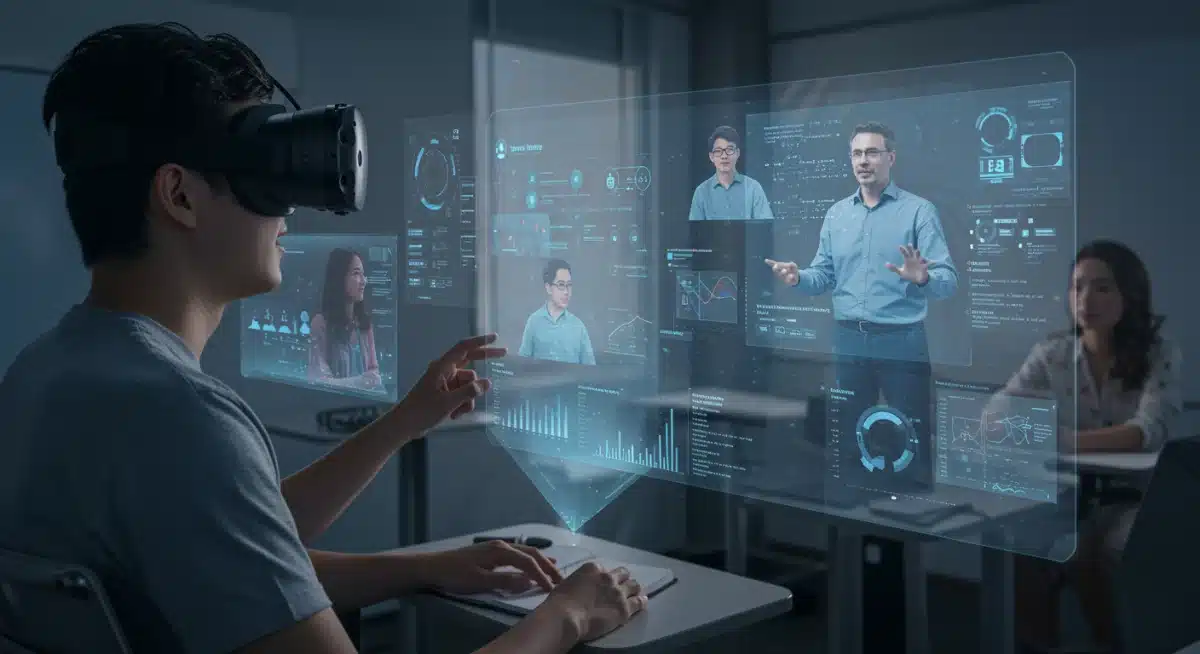
Technology plays a pivotal role in both online and in-person settings. Advanced AI-powered learning platforms, virtual reality simulations, and personalized adaptive learning paths are common in online courses. For campus-based students, these tools often supplement traditional lectures and lab work, creating a richer, more interactive educational experience.
- AI-driven personalized learning pathways
- Virtual reality and augmented reality for skill development
- Enhanced collaborative digital workspaces
- Real-time feedback mechanisms
Accessibility has also seen significant improvements. Online learning, in particular, offers unparalleled flexibility for individuals balancing work, family, or geographical constraints. This has opened doors to higher education for populations previously underserved, contributing to a more diverse student body.
Understanding the nuances of these evolving landscapes is crucial for students, educators, and policymakers alike. The goal is to maximize positive learning outcomes and ensure graduates are well-prepared for the challenges and opportunities of the 2026 job market, regardless of their chosen learning path.
Academic Performance: A Head-to-Head Comparison
When comparing academic performance between online and in-person learning outcomes, the data in 2026 reveals interesting trends. Initial concerns about the rigor of online education have largely dissipated, as institutions have refined their digital pedagogical approaches and students have become more adept at navigating virtual environments.
Studies indicate that for many disciplines, there is no significant difference in grade point averages (GPAs) between online and in-person students. This parity suggests that effective course design and dedicated student engagement are more critical factors than the modality itself.
Factors Influencing Online Academic Success
Online success often hinges on several key elements. Self-discipline and time management are paramount, as students must independently structure their study schedules. Additionally, the quality of online instructional materials, the responsiveness of instructors, and the robustness of virtual support services significantly impact student achievement.
- Strong self-motivation and discipline
- Access to reliable internet and technology
- Effective digital course design
- Timely instructor feedback and support
Conversely, in-person learning still offers unique advantages. The immediate feedback from peers and instructors in a classroom setting, spontaneous discussions, and access to campus resources like libraries and specialized labs can enhance learning for certain subjects and learning styles. However, the benefits are increasingly tied to how well these traditional elements are integrated with modern teaching methods.
Ultimately, academic performance is a multifaceted outcome influenced by individual student characteristics, institutional support, and pedagogical effectiveness. Both online and in-person modalities have demonstrated their capacity to foster strong academic results when implemented thoughtfully.
Skill Development and Employability for 2026 Graduates
Beyond academic grades, the development of critical skills and subsequent employability are paramount for U.S. graduates in 2026. The job market demands a blend of technical proficiency and soft skills, and both online and in-person learning contribute to these areas, albeit in different ways.
Online learning environments often foster superior digital literacy, independent problem-solving, and adaptability. Students learn to navigate complex online tools, collaborate virtually, and manage projects remotely—skills that are highly valued in today’s increasingly digital workplaces. These experiences directly translate into a competitive edge for many graduates.

In-Person Advantages for Soft Skills
In-person education, on the other hand, traditionally excels at nurturing interpersonal skills, leadership, and emotional intelligence through direct social interaction, group projects, and extracurricular activities. The campus experience provides a rich environment for networking and developing a sense of community, which can be invaluable for career progression.
- Enhanced digital literacy and remote collaboration
- Stronger independent learning and self-management
- Improved adaptability to new technologies
- Direct social interaction and networking opportunities
Many employers in 2026 are looking for graduates who possess a hybrid set of skills, comfortable with both digital tools and face-to-face communication. Therefore, the most successful educational models, regardless of modality, are those that consciously integrate opportunities for both types of skill development. The focus is shifting from where one learns to what one learns and how effectively those skills are applied.
Mental Health and Well-being in Different Learning Settings
The impact of learning modality on student mental health and well-being has become a significant area of focus by 2026. Both online and in-person environments present unique challenges and advantages that influence student welfare.
Online learning, while offering flexibility, can sometimes lead to feelings of isolation and a blurring of work-life boundaries. Students may struggle with maintaining social connections and separating their academic life from their personal space, potentially leading to increased stress and burnout. Institutions are actively developing virtual support systems and fostering online communities to counteract these effects.
Campus Life and Support Systems
In-person learning provides a built-in social network and access to on-campus mental health services, counseling, and recreational facilities. The routine of attending classes and participating in campus activities can offer structure and a sense of belonging, which are crucial for many students’ well-being. However, the pressures of campus life, including academic rigor and social dynamics, can also contribute to stress.
- Risk of isolation in online settings
- Importance of virtual community building
- On-campus access to mental health services
- Structured routine and social interaction in traditional settings
The optimal approach often involves a blended model, where students can leverage the flexibility of online resources while also engaging in meaningful in-person interactions. Universities are increasingly investing in holistic support services that cater to the diverse needs of their student population, recognizing that mental well-being is foundational to academic and career success.
Cost-Effectiveness and Return on Investment
For U.S. graduates in 2026, the financial implications of higher education remain a critical consideration. The cost-effectiveness and potential return on investment (ROI) vary significantly between online and in-person learning, influencing student choice and access.
Online programs often boast lower tuition fees, reduced living expenses (as commuting or relocating is unnecessary), and fewer incidental costs such as campus activity fees. This makes higher education more accessible to a broader demographic, particularly those who cannot afford the traditional residential college experience. The ability to work while studying online further enhances its financial viability for many.
Long-Term Career Earnings
While the upfront costs of in-person education are generally higher, including tuition, room and board, and transportation, the perceived ROI can sometimes be greater, particularly for graduates from prestigious institutions with strong alumni networks. These networks can open doors to internships and job opportunities that might be less accessible to purely online graduates.
- Lower tuition and living expenses for online programs
- Flexibility to work while studying online
- Higher upfront costs for in-person education
- Potential for stronger alumni networks and career connections from traditional campuses
However, the narrative is shifting. As online degrees gain more credibility and employers recognize the value of skills acquired through digital learning, the earning potential of online graduates is increasingly competitive. The ultimate ROI is less about the modality and more about the quality of the program, the relevance of the skills learned, and the individual’s proactive career development strategies.
Future Trends and Recommendations for Higher Education
Looking ahead to the post-2026 landscape, several trends are poised to further shape higher education. The integration of AI in personalized learning will become even more sophisticated, offering tailored educational paths that adapt to individual student progress and learning styles. Micro-credentials and stackable certifications are gaining traction, providing flexible alternatives to traditional degrees.
Hybrid models are likely to become the default, combining the best aspects of online and in-person education. This allows students to experience campus life and direct interaction while also benefiting from the flexibility and accessibility of digital resources. Universities are investing heavily in instructional design and technology infrastructure to support these evolving models.
Policy and Institutional Adaptations
Policymakers are recognizing the need for updated regulations that support diverse learning modalities, ensuring quality control and equitable access. Institutions are also fostering stronger partnerships with industry to ensure curricula remain relevant and graduates are equipped with the skills employers actually need. This collaboration is crucial for bridging the gap between academia and the professional world.
- Advanced AI for personalized learning experiences
- Growth of micro-credentials and alternative pathways
- Dominance of hybrid learning models
- Increased industry-academia partnerships
For students, the recommendation is to research programs thoroughly, considering their learning style, career goals, and financial situation. Choosing a program that offers a blend of theoretical knowledge, practical skills, and robust support services, regardless of its primary modality, will be key to success in the dynamic environment of 2026 and beyond.
| Key Aspect | Comparative Insight for 2026 |
|---|---|
| Academic Outcomes | Little significant difference in GPA, driven by course quality and student engagement. |
| Skill Development | Online excels in digital literacy; In-person in interpersonal and leadership skills. |
| Cost & ROI | Online often lower cost; In-person potentially higher network ROI. |
| Well-being | Online faces isolation risks; In-person benefits from social structure. |
Frequently Asked Questions About 2026 Higher Education
Yes, by 2026, online degrees from accredited institutions are widely respected by employers. The focus has shifted from the mode of delivery to the quality of the program and the skills gained by the graduate. Many top universities now offer robust online options.
Neither modality is inherently superior for career advancement. Success depends on the individual’s ability to apply learned skills, network effectively, and continuously adapt. A blended approach, combining digital proficiency with strong interpersonal skills, is often most advantageous.
In-person students benefit from on-campus counseling and social networks. Online learners often access virtual mental health services, peer support groups, and digital wellness resources. Institutions are striving to provide comprehensive support across both modalities.
Hybrid learning is rapidly becoming a dominant model, integrating the flexibility of online resources with the engagement of in-person interaction. Many institutions are moving towards offering flexible options that allow students to customize their learning experience.
Key advancements include AI-powered adaptive learning platforms, immersive VR/AR experiences for practical training, enhanced collaborative digital tools, and sophisticated analytics for personalized feedback. These technologies are improving engagement and learning outcomes significantly.
Conclusion
The comparative analysis of online versus in-person learning outcomes for U.S. graduates in 2026 reveals a nuanced educational landscape where both modalities offer distinct advantages. While online learning excels in accessibility, digital skill development, and often cost-effectiveness, in-person education continues to foster crucial soft skills, immediate social interaction, and robust campus support. The future of higher education appears to be a convergence, with hybrid models gaining prominence, allowing students to leverage the strengths of both worlds. Ultimately, student success in 2026 and beyond will hinge on thoughtful program design, institutional support, and the individual’s proactive engagement with their chosen learning path, ensuring they are well-prepared for a dynamic and evolving global workforce.