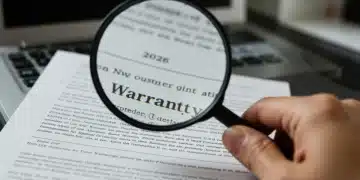
2025 Warranty Laws: Maximize Protection on Major Purchases

The new warranty laws in 2025 significantly enhance consumer protection for major purchases over $500, introducing stricter regulations on manufacturers and retailers to ensure greater financial security and transparency for buyers in the United States.
As consumers, navigating the complexities of product warranties can often feel like a daunting task, especially when it comes to significant investments. The landscape of consumer protection is set to evolve with the introduction of new warranty laws 2025, specifically designed to bolster your rights and provide greater financial security for major purchases exceeding $500. Understanding these changes is not merely an academic exercise; it’s a critical step toward safeguarding your hard-earned money and ensuring you receive the quality and support you expect from manufacturers and retailers.
The evolving landscape of consumer protection
The consumer protection framework is constantly adapting to market dynamics and technological advancements. Historically, warranty laws have provided a baseline of protection, but often left consumers feeling vulnerable when dealing with complex products or uncooperative vendors. The new legislation aims to address these gaps, creating a more equitable playing field. These changes reflect a growing recognition of the financial impact that defective or malfunctioning major purchases can have on households.
For decades, consumers have faced challenges ranging from unclear warranty terms to arduous claim processes. The previous legal structures, while foundational, sometimes struggled to keep pace with the rapid innovation in product design and sales methods. This often led to frustration and financial loss for individuals who had invested significantly in items like electronics, appliances, or automotive components. The 2025 updates are a direct response to these persistent issues, striving to instill greater trust and accountability in the marketplace.
Key drivers behind the 2025 reforms
- Increased complexity of modern products, making self-repair difficult.
- Rise of e-commerce, creating distance between buyers and sellers.
- Consumer advocacy groups pushing for stronger protections.
- Desire to standardize warranty practices across different industries.
The reforms are not just about adding new rules; they are about refining existing ones to be more effective and enforceable. They seek to prevent situations where consumers are left without recourse, even after spending a substantial amount of money. This proactive approach underscores a commitment to fostering a consumer environment where confidence in purchases, especially those exceeding $500, is paramount.
Defining “major purchases” and the $500 threshold
The $500 threshold is a crucial element of the new warranty laws, specifically targeting purchases that represent a significant financial outlay for most consumers. This includes a wide array of goods, from high-end electronics and major home appliances to specialized tools and automotive parts. The intention behind this specific value is to focus enhanced protections on items where a malfunction or defect would cause substantial financial hardship or inconvenience.
Prior to these changes, the level of protection often varied widely regardless of the purchase price. Now, if an item costs $500 or more, it automatically triggers a higher standard of warranty coverage and consumer rights. This clarity helps both consumers and retailers understand their obligations and entitlements from the outset. It removes ambiguity and ensures that high-value investments are adequately safeguarded.
Examples of purchases covered by the $500 threshold
- Large screen televisions and home theater systems.
- Refrigerators, washing machines, and other major kitchen appliances.
- High-end computers, laptops, and professional-grade cameras.
- Certain power tools and outdoor equipment.
This threshold ensures that consumers are not left in a lurch when an expensive item fails prematurely. It’s a recognition that these purchases are often essential to daily life or represent a considerable saving effort. By setting a clear minimum, the law provides a uniform level of protection that was previously inconsistent across various product categories and manufacturers.
Understanding enhanced warranty coverage under the new laws
The 2025 legislation introduces several significant enhancements to warranty coverage, moving beyond basic repair or replacement. These changes are designed to provide more comprehensive and clearer protections, addressing common frustrations consumers have experienced. One of the most impactful changes is the standardization of minimum warranty periods for major purchases, reducing the likelihood of manufacturers offering overly short or restrictive terms.
Furthermore, the new laws mandate clearer communication of warranty terms and conditions. This means less fine print and more accessible language, ensuring consumers fully understand what is covered, for how long, and the process for making a claim. This transparency is vital for informed decision-making and helps prevent disputes arising from misunderstandings. Consumers will find it easier to compare warranty offerings across different brands.
Key enhancements in warranty coverage
- Mandatory minimum warranty durations for items over $500.
- Stricter requirements for clear and concise warranty documentation.
- Expanded definition of “defect” to include design flaws affecting usability.
- Easier access to repair services or replacement options.
The goal is to ensure that a warranty is not merely a formality but a robust promise of product quality and reliability. These enhancements empower consumers to demand better from manufacturers and retailers, knowing they have legal backing. The emphasis on clarity and extended coverage represents a significant win for consumer confidence and financial security.
Streamlined claims process and consumer recourse
One of the most frustrating aspects of warranty claims has historically been the convoluted and often lengthy process. The new warranty laws in 2025 address this directly by introducing requirements for a more streamlined and efficient claims procedure. Manufacturers and retailers are now obligated to provide clear, accessible channels for consumers to initiate claims, whether online, via phone, or in person. This aims to reduce the red tape and administrative burden on the consumer.
Beyond simplified claims, the legislation also strengthens consumer recourse options. If a product cannot be repaired within a reasonable timeframe or after a specified number of attempts, consumers may now have a clearer path to a full refund or a complete replacement, rather than being stuck with a perpetually malfunctioning item. This shifts the burden of proof and responsibility more firmly onto the seller, ensuring they stand by their products.

New mechanisms for consumer recourse
- Mandatory response times for warranty claims.
- Defined limits on repair attempts before replacement or refund is required.
- Access to independent arbitration or mediation services for disputes.
- Penalties for non-compliance by manufacturers or retailers.
These provisions are designed to give consumers real power when a product fails to meet expectations. No longer will consumers feel helpless against large corporations. The streamlined process and enhanced recourse mechanisms ensure that warranties are not just promises, but enforceable rights that protect financial investments in major purchases.
Financial implications for consumers and businesses
The introduction of the new warranty laws in 2025 carries substantial financial implications for both consumers and businesses. For consumers, the most immediate benefit is enhanced financial protection. Knowing that major purchases over $500 are backed by stronger, clearer warranties reduces the risk of unexpected replacement costs or extended periods without a functional product. This translates into greater peace of mind and potentially significant savings over the lifetime of a product.
From a business perspective, these laws necessitate adjustments in manufacturing, quality control, and customer service. While there might be an initial increase in operational costs to meet stricter compliance and service standards, the long-term benefits include increased consumer trust and brand loyalty. Businesses that embrace these changes and provide excellent warranty service are likely to gain a competitive advantage, attracting consumers who prioritize reliability and strong after-sales support.
Impact of new warranty laws
- For Consumers: Reduced financial risk, greater confidence in purchases, clearer understanding of rights.
- For Businesses: Potential increase in production costs, improved brand reputation, higher customer retention.
Ultimately, the financial impact aims to create a healthier market where product quality is prioritized, and consumers are protected. While businesses may need to invest in adapting, the overall ecosystem benefits from higher standards and a more transparent relationship between buyers and sellers. This fosters sustainable economic growth driven by consumer confidence.
Tips for maximizing your protection under the new laws
With the new warranty laws in 2025 coming into effect, consumers have powerful tools at their disposal to protect their major purchases. However, simply knowing the laws exist isn’t enough; proactive steps are essential to maximize your protection. The first crucial step is to meticulously read and understand the warranty terms specific to your purchase. Even with standardized language, nuances can exist, and being informed is your best defense.
Furthermore, maintaining detailed records of your purchase is paramount. This includes receipts, warranty cards, any communication with the seller or manufacturer, and documentation of any issues encountered. These records serve as critical evidence should you need to file a claim. Digital copies are often more secure and easily accessible than physical ones, so consider scanning important documents.
Essential steps for consumers
- Always register your product with the manufacturer if required for warranty validation.
- Keep all purchase receipts and warranty documentation in a safe, accessible place.
- Document any product issues with photos, videos, and detailed notes.
- Understand the claims process and contact channels provided by the manufacturer.
Finally, don’t hesitate to assert your rights. If you encounter resistance or feel your warranty claim is being unfairly denied, leverage the new recourse mechanisms. Contact consumer protection agencies or seek legal advice if necessary. Your informed and proactive approach is the best way to ensure you fully benefit from the enhanced protections offered by the new warranty laws 2025.
Looking ahead: The future of consumer warranties
The new warranty laws 2025 represent a significant milestone, but they are unlikely to be the final word in consumer protection. The rapid pace of technological innovation, the emergence of new product categories, and evolving consumer expectations will continue to shape the future of warranties. We can anticipate further refinements and adaptations to ensure that legal frameworks remain relevant and effective in an ever-changing marketplace.
One potential area for future development is the integration of digital warranty tracking and management systems. Imagine a universal digital platform where all your product warranties are stored, easily accessible, and automatically remind you of coverage expiring or service intervals. This could further streamline the claims process and enhance consumer convenience. Additionally, as products become more interconnected, warranty considerations for integrated systems may become more complex.
Anticipated trends in warranty evolution
- Greater emphasis on product longevity and sustainability in warranty terms.
- Increased use of AI and predictive analytics for proactive maintenance and warranty support.
- Development of industry-specific warranty standards for emerging technologies.
- Enhanced global harmonization of consumer protection laws for international purchases.
The continuous evolution of warranty laws reflects a societal commitment to fair trade and consumer empowerment. By staying informed and engaged, consumers can help drive these future changes, ensuring that their financial investments are always protected, regardless of how technology and commerce evolve.
| Key Aspect | Brief Description |
|---|---|
| $500 Threshold | New laws apply enhanced protections to purchases costing $500 or more, targeting significant investments. |
| Enhanced Coverage | Mandatory minimum warranty periods and clearer terms for better consumer understanding. |
| Streamlined Claims | Easier, faster process for filing claims with defined repair/replacement options. |
| Financial Impact | Reduced consumer risk, increased business accountability, fostering market trust. |
Frequently asked questions about 2025 warranty laws
The main objective is to enhance consumer protection for major purchases over $500 by establishing clearer guidelines, stronger rights, and more efficient recourse mechanisms. This aims to increase transparency and accountability from manufacturers and retailers, safeguarding consumers’ financial investments in high-value products.
Any product or service purchased for $500 or more will automatically fall under the enhanced protections of the new laws. This means clearer warranty terms, potentially longer minimum coverage periods, and a more straightforward process for repairs, replacements, or refunds compared to items below this threshold, ensuring significant investments are better secured.
First, review your purchase records and the warranty terms. If you believe the denial is unjust, communicate clearly with the company, citing the relevant sections of the new laws. If unresolved, you can escalate the issue to consumer protection agencies, utilize independent arbitration services, or seek legal counsel for further assistance in upholding your rights.
The relevance of extended warranties may shift. While the new laws provide stronger baseline protection, extended warranties can still offer benefits like longer coverage durations or accidental damage protection not covered by standard warranties. Evaluate the specific terms of an extended warranty against the enhanced statutory protections to determine if it offers additional value for your purchase.
To stay updated, regularly check official government consumer protection websites, subscribe to newsletters from reputable consumer advocacy organizations, and follow financial news outlets specializing in consumer rights. These sources will provide timely information on any further amendments or new legislation impacting product warranties and consumer protections in the future.
Conclusion
The introduction of the new warranty laws in 2025 marks a pivotal moment for consumer protection in the United States. These comprehensive reforms, particularly those targeting major purchases over $500, are designed to empower individuals with stronger rights, clearer terms, and more effective avenues for recourse. By understanding and actively utilizing these new provisions, consumers can significantly enhance their financial security and make purchasing decisions with greater confidence. This evolution in legal standards not only benefits buyers but also encourages manufacturers and retailers to prioritize product quality and customer satisfaction, fostering a more trustworthy and transparent marketplace for everyone.