New US Online Subscription Laws 2026: Consumer Protection Guide

New US Online Subscription Laws for 2026: What You Need to Know
The digital landscape is constantly evolving, and with it, the regulatory framework governing our online interactions. For consumers and businesses alike, 2026 marks a pivotal year, as new, comprehensive online subscription laws are set to take effect across the United States. These laws are designed to significantly bolster consumer protection, aiming to bring greater transparency, control, and fairness to the often-complex world of recurring digital services. Understanding these changes is not just beneficial; it’s essential for navigating the future of online commerce.
For years, the convenience of online subscriptions has been a double-edged sword. While they offer easy access to a vast array of services, from streaming entertainment to software and fitness programs, they have also been a source of frustration for many. Hidden fees, difficult cancellation processes, and unclear terms have led to a growing demand for stronger consumer safeguards. The upcoming 2026 legislation is a direct response to these concerns, promising a more equitable playing field for everyone involved in the digital subscription economy.
This comprehensive guide will delve into the specifics of these new online subscription laws, outlining the key provisions, their implications for both consumers and businesses, and what steps you can take to prepare. Whether you’re a regular subscriber to digital services or a business offering them, staying informed about these regulatory shifts is crucial for compliance and peace of mind.
The Catalyst for Change: Why New Online Subscription Laws Are Needed
The proliferation of subscription-based models has transformed how we consume goods and services. From media giants to niche software providers, recurring billing has become the norm. However, this growth has not been without its challenges. Consumer complaints regarding ‘dark patterns’ – deceptive user interface designs intended to trick users into actions they might not otherwise take – have been on the rise. These often manifest as difficult-to-find cancellation buttons, automatic renewals without explicit consent, and opaque pricing structures.
Existing state and federal regulations have attempted to address some of these issues, but their patchwork nature has often led to inconsistencies and loopholes. The Federal Trade Commission (FTC) has, for instance, taken action against companies engaging in deceptive subscription practices under its authority to prevent unfair and deceptive acts or practices. However, a more unified and robust framework was deemed necessary to keep pace with the rapid evolution of the digital marketplace.
The push for new online subscription laws in 2026 is driven by several factors:
- Increased Consumer Complaints: A consistent rise in reports from consumers struggling with unwanted renewals, unexpected charges, and frustrating cancellation processes.
- Technological Advancements: The sophisticated nature of digital platforms allows for complex subscription models that can be difficult for the average consumer to understand.
- Lack of Uniformity: Disparate state laws create confusion for national businesses and provide uneven protection for consumers across different jurisdictions.
- International Precedents: Other countries and regions, such as the European Union with its robust consumer protection directives, have set benchmarks for how digital services should operate, influencing discussions in the US.
These factors collectively highlighted the urgent need for a more coherent and protective legal framework. The 2026 online subscription laws aim to provide just that, establishing clear guidelines that prioritize consumer rights and foster a more trustworthy digital ecosystem.
Key Provisions of the 2026 Online Subscription Laws
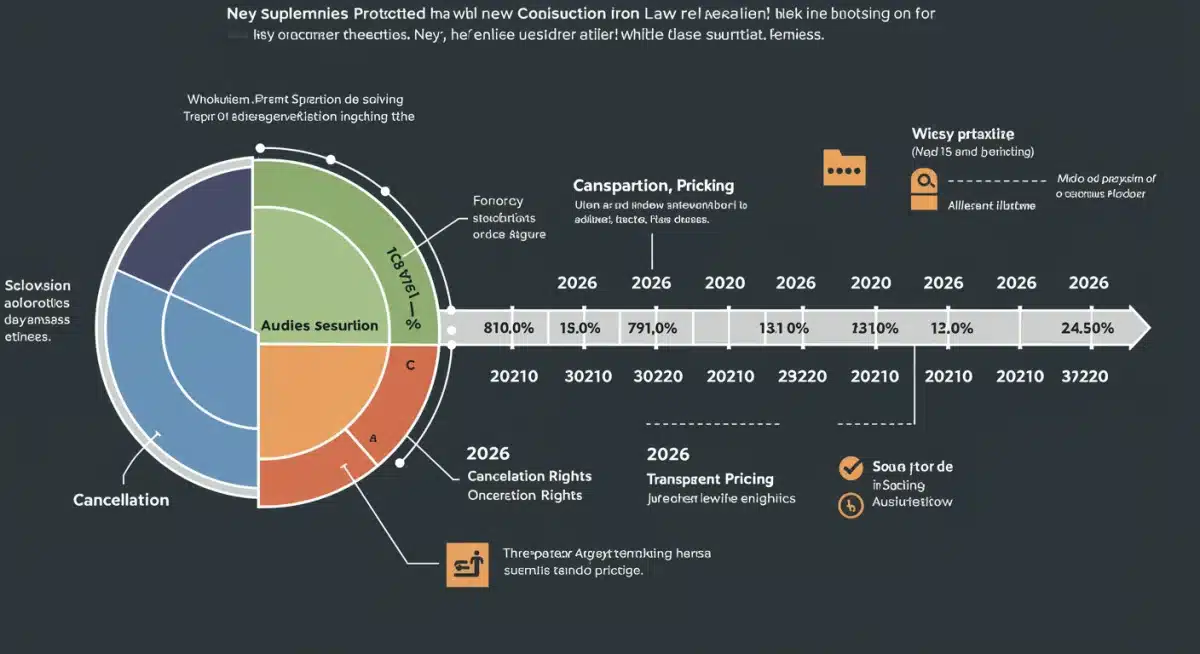
While the final details of the legislation are extensive, several core provisions stand out as foundational to the new online subscription laws. These are designed to empower consumers and hold businesses to higher standards of transparency and fairness.
1. Enhanced Disclosure Requirements
One of the most significant changes will be the mandate for clearer and more prominent disclosures. This means businesses will be required to:
- Clearly State All Terms: Before a consumer commits to a subscription, all material terms, including the price, billing frequency, any introductory offers, and how the subscription will renew, must be presented in a clear, conspicuous, and easy-to-understand manner.
- Highlight Renewal Information: Specific attention must be paid to automatic renewal terms, including the date of the next renewal and the amount that will be charged. This information cannot be buried in fine print.
- Provide Easy Access to Terms: The full terms and conditions must be readily accessible, not hidden behind multiple clicks or obscure links.
The goal is to eliminate ambiguity and ensure consumers make informed decisions, free from deceptive practices.
2. Simplified Cancellation Processes
Perhaps the most anticipated change for many consumers is the simplification of cancellation processes. The new online subscription laws will likely mandate ‘click-to-cancel’ or similarly straightforward methods, meaning:
- Equally Easy Cancellation: If a subscription can be initiated online with a few clicks, it must also be terminable online with a similar level of ease. No more phone calls, lengthy email exchanges, or convoluted navigation paths solely designed to deter cancellations.
- Immediate Effect: Consumers should have the option for immediate cancellation, or at least a clear understanding of when the cancellation will take effect and any prorated refunds.
- Confirmation of Cancellation: Businesses will be required to provide clear and unambiguous confirmation of cancellation, ideally via email or within the user’s account, detailing the termination date.
This provision directly targets the ‘roach motel’ problem, where getting into a subscription is easy, but getting out is nearly impossible.
3. Explicit Consent for Automatic Renewals
The era of implied consent for automatic renewals is largely over. The 2026 online subscription laws will likely require:
- Affirmative Consent: Consumers must actively and explicitly agree to automatic renewals. Pre-checked boxes or terms buried in legal jargon will not suffice.
- Pre-Renewal Notifications: Businesses will be mandated to send clear and timely reminders before an automatic renewal occurs, especially for subscriptions with longer billing cycles (e.g., annual subscriptions). These notifications must include the upcoming charge, renewal date, and easy instructions on how to cancel.
4. Fair Pricing and Billing Practices
While not a direct price control, the new laws will likely address deceptive pricing. This could include:
- Prohibition of Hidden Fees: All charges must be clearly disclosed upfront. No unexpected ‘processing fees’ or ‘service charges’ added at the last minute.
- Transparent Promotional Offers: If a promotional price is offered, the regular price after the promotion ends must be clearly stated, along with the duration of the promotional period.
5. Data Privacy and Security
Although consumer data privacy is often covered by separate legislation (like CCPA or future federal privacy laws), the context of online subscriptions often involves extensive data collection. The new online subscription laws may include provisions reinforcing that personal data collected for subscription purposes cannot be used for unrelated marketing without explicit consent, further protecting consumer information.
Impact on Consumers: A New Era of Empowerment
For consumers, these new online subscription laws represent a significant victory. The benefits are manifold and aim to restore control and confidence in digital transactions.
Increased Transparency and Clarity
No more squinting at fine print or searching for hidden clauses. Consumers will be presented with clear, concise information about what they are signing up for, how much it costs, and how to end it. This enhanced transparency will lead to better-informed decisions and fewer unwanted commitments.
Easier Management of Subscriptions
The simplified cancellation processes will be a game-changer. Consumers will be able to manage their subscriptions more effectively, canceling services they no longer use or need without jumping through hoops. This could lead to significant savings and reduce financial stress associated with forgotten or ‘sticky’ subscriptions.
Protection Against Deceptive Practices
The explicit consent requirements for automatic renewals and the prohibition of dark patterns will shield consumers from manipulative tactics. This means fewer instances of being unwittingly enrolled in services or charged for renewals they did not intend to authorize.
Greater Financial Control
With clearer disclosures and easier cancellations, consumers will have better oversight of their recurring expenses. This can help individuals and households budget more effectively and avoid unexpected drains on their finances.
Enhanced Trust in Digital Services
Ultimately, by fostering a fairer and more transparent environment, these laws are expected to build greater trust between consumers and online service providers. When consumers feel respected and protected, they are more likely to engage with digital services confidently.
Impact on Businesses: Navigating the New Regulatory Landscape
For businesses operating on a subscription model, the 2026 online subscription laws will necessitate significant operational and strategic adjustments. While the changes may seem daunting, they also present an opportunity to build stronger customer relationships and enhance brand reputation.
Compliance Challenges and Opportunities
Businesses will need to review and potentially overhaul their entire subscription lifecycle, from initial sign-up flows to cancellation procedures and communication strategies. This includes:
- Revising User Interfaces: Ensuring disclosure and cancellation options are prominent and easy to access.
- Updating Terms and Conditions: Aligning all legal documents with the new requirements.
- Implementing New Communication Protocols: Developing systems for pre-renewal notifications and cancellation confirmations.
- Training Staff: Educating customer service teams on the new policies and how to assist customers effectively.
While compliance will require investment, it also offers an opportunity to streamline operations and improve the customer experience.
Potential for Reduced Churn (Long-Term)
Initially, some businesses might fear an increase in cancellations due to easier processes. However, in the long term, transparent practices can lead to reduced ‘bad churn’ – cancellations from frustrated customers. By building trust and offering a straightforward experience, businesses can cultivate a more loyal customer base that values the service itself, rather than being trapped by difficult exit strategies.
Reputation and Brand Building
Companies that proactively embrace these new regulations and prioritize consumer rights will likely gain a competitive advantage. A reputation for fairness and transparency can be a powerful differentiator in a crowded market, attracting and retaining customers who value ethical business practices.
Risk of Penalties and Enforcement
Non-compliance with the new online subscription laws will carry significant penalties, potentially including hefty fines and legal action from regulatory bodies like the FTC or state attorneys general. Businesses must take these laws seriously to avoid costly repercussions.
Preparing for 2026: Steps for Consumers and Businesses
The implementation of these new online subscription laws is still some time away, but proactive preparation is key for both consumers and businesses.
For Consumers:
- Audit Your Subscriptions: Take stock of all your current online subscriptions. Understand what you’re paying for and when renewals occur.
- Read the Fine Print (Now and Later): While the new laws aim for clarity, it’s always wise to read terms and conditions. Post-2026, pay attention to the new, clearer disclosures.
- Familiarize Yourself with Your Rights: Understand what the new laws entitle you to, especially regarding cancellation and renewal notifications.
- Keep Records: Save confirmation emails for sign-ups and cancellations. This can be valuable if disputes arise.
- Report Violations: If you encounter a business that doesn’t comply with the new laws, report them to the relevant consumer protection agencies (e.g., FTC, state attorney general).
For Businesses:
- Conduct a Comprehensive Legal Review: Engage legal counsel to thoroughly assess your current subscription practices against the upcoming 2026 online subscription laws.
- Redesign User Flows: Focus on making sign-up and cancellation processes intuitive, transparent, and compliant. This includes website and app interfaces.
- Update Communication Strategies: Develop clear, timely, and compliant pre-renewal notifications and cancellation confirmations.
- Train Your Team: Ensure all customer-facing staff are fully aware of the new regulations and how to handle customer inquiries and requests related to subscriptions.
- Invest in Technology: Consider software solutions that can help manage subscription billing, renewals, and cancellations in a compliant manner.
- Monitor Regulatory Updates: Stay abreast of any further guidance or amendments to the laws as 2026 approaches.
The Broader Implications: A Shift Towards Digital Ethics
The introduction of these expansive online subscription laws in 2026 signifies a broader shift in the digital economy. It reflects a growing recognition that just as physical commerce is governed by rules designed to protect consumers, so too must the digital realm. This move towards greater digital ethics is not isolated; it parallels global efforts in data privacy, cybersecurity, and algorithmic transparency.
For businesses, this means that merely offering a desirable product or service is no longer enough. The ‘how’ – how you acquire customers, how you manage their accounts, and how you allow them to exit – is becoming equally critical. Those who embrace this ethical pivot will not only comply with the law but also build stronger, more sustainable relationships with their customer base.
For consumers, it heralds an era where they can engage with digital services with greater confidence, knowing that their rights are protected by law. This empowers individuals to make choices that truly align with their needs and financial well-being, free from the fear of being entrapped by complex or deceptive practices.
Addressing Potential Challenges and Future Outlook
While the new online subscription laws are largely welcomed, their implementation will not be without challenges. Businesses, particularly smaller ones, may struggle with the cost and complexity of compliance. Regulatory bodies will face the task of consistent enforcement across a vast and varied digital landscape. There will likely be initial periods of adjustment, clarification, and perhaps even legal challenges as businesses adapt.
However, the long-term outlook is positive. As the digital economy matures, so too must its regulatory framework. These laws are a crucial step towards creating a more transparent, fair, and trustworthy online environment for everyone. They set a precedent for future digital regulations, emphasizing consumer autonomy and accountability for service providers.
The continuous evolution of technology means that regulatory efforts will always be playing catch-up to some extent. Therefore, these 2026 online subscription laws should be viewed not as a final solution, but as a significant milestone in an ongoing journey towards comprehensive digital consumer protection. Future amendments and additions will likely address emerging issues, ensuring that the legal framework remains relevant and effective.
Conclusion: A Brighter Future for Online Subscriptions
The upcoming 2026 online subscription laws in the US are poised to reshape the digital subscription landscape fundamentally. By prioritizing transparency, easy cancellation, and explicit consent, these regulations aim to empower consumers and foster a more ethical environment for businesses. While compliance will require effort and adaptation from service providers, the long-term benefits of increased trust and a fairer marketplace are undeniable.
For consumers, this means more control over their digital spending and a clearer understanding of their commitments. For businesses, it’s an opportunity to demonstrate integrity, build lasting customer relationships, and thrive in a more transparent ecosystem. Staying informed and prepared is the best way to navigate these changes successfully and embrace the future of online subscriptions.