Identity Theft Prevention 2026: 7 Essential Steps for US Consumers

In an increasingly interconnected world, where our lives are inextricably linked to the digital realm, the threat of identity theft looms larger than ever. As we navigate through 2026, the sophistication of cybercriminals continues to evolve, making robust Identity Theft Prevention 2026 strategies not just advisable, but absolutely essential for every US consumer. This comprehensive guide will equip you with seven crucial, actionable steps to fortify your defenses and safeguard your personal and financial information against the ever-present dangers of identity fraud.
Identity theft is not merely an inconvenience; it can lead to devastating financial losses, damaged credit scores, and immense emotional distress. From fraudulent credit card charges to stolen tax refunds, and even medical identity theft, the consequences are far-reaching. The digital landscape of 2026, characterized by advanced AI, pervasive IoT devices, and increasingly complex online interactions, presents new avenues for identity thieves to exploit. Therefore, understanding and implementing proactive measures is paramount.
This article delves deep into practical, up-to-date strategies that go beyond basic advice. We’ll explore everything from strengthening your digital footprint to understanding the nuances of credit freezes and monitoring services, ensuring you are well-prepared for the challenges of the modern era. By the end of this read, you will have a clear roadmap to enhance your personal security and achieve peace of mind in 2026 and beyond.
Understanding the Evolving Threat Landscape in 2026
Before we dive into the preventative measures, it’s vital to grasp the current state of identity theft. In 2026, cybercriminals are leveraging cutting-edge technologies to execute more sophisticated attacks. Artificial intelligence (AI) and machine learning (ML) are being used to craft highly convincing phishing emails, create deepfake audio/video for social engineering scams, and automate credential stuffing attacks at an unprecedented scale. The proliferation of connected devices (IoT) also expands the attack surface, creating more entry points for malicious actors to access personal data.
Furthermore, data breaches continue to be a significant concern. Large corporations, government agencies, and even small businesses can fall victim, exposing millions of records containing sensitive information such as names, addresses, Social Security numbers, and financial details. Once this data is compromised, it becomes a valuable commodity on the dark web, fueling various forms of identity fraud. The sheer volume and velocity of data being generated and shared online make Identity Theft Prevention 2026 a complex, ongoing challenge that requires constant vigilance.
Another emerging threat is synthetic identity fraud, where criminals combine real and fake information to create a new, entirely fabricated identity. This type of fraud can be particularly difficult to detect through traditional methods, as it doesn’t directly involve stealing an existing identity but rather creating a new one that slowly builds a credit history. Staying informed about these evolving tactics is the first step in effective prevention.
Step 1: Fortify Your Digital Defenses with Strong, Unique Passwords and Multi-Factor Authentication
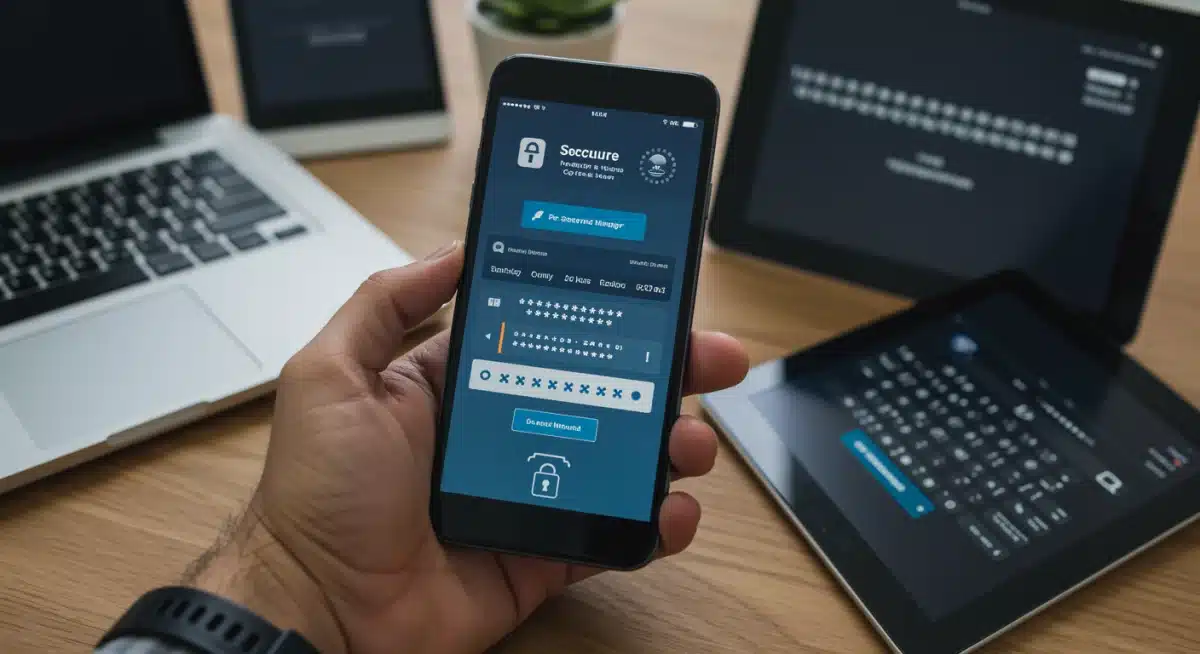
The foundation of any robust Identity Theft Prevention 2026 strategy lies in strong digital defenses. Your online accounts are the gateways to your personal and financial information, and weak passwords are an open invitation for cybercriminals. In 2026, the standard advice of using complex passwords (a mix of uppercase and lowercase letters, numbers, and symbols) remains critical, but it’s no longer enough on its own. The key is uniqueness and length. Each online account should have a distinct, lengthy password.
This is where password managers become indispensable tools. These applications securely store all your login credentials, generate strong, unique passwords for new accounts, and often auto-fill them for you. They eliminate the need to remember dozens of complex passwords, significantly reducing the risk of credential reuse, a common vulnerability exploited by identity thieves. Make sure your chosen password manager uses strong encryption and has a reputable security track record.
Beyond passwords, multi-factor authentication (MFA) is your strongest ally. MFA adds an extra layer of security by requiring a second form of verification in addition to your password. This could be a code sent to your phone, a fingerprint scan, facial recognition, or a hardware security key. Even if a thief manages to get your password, they won’t be able to access your account without this second factor. Enable MFA on every account that offers it, especially for email, banking, social media, and any service containing sensitive personal data.
Regularly review your account settings for any unauthorized activity and update your passwords every few months, especially for critical accounts. Avoid using public Wi-Fi for sensitive transactions, or if you must, use a reputable Virtual Private Network (VPN) to encrypt your connection. These proactive measures will significantly reduce your vulnerability to online threats.
Step 2: Implement a Credit Freeze and Fraud Alerts
One of the most effective ways to prevent identity thieves from opening new accounts in your name is to implement a credit freeze. A credit freeze, also known as a security freeze, restricts access to your credit report, meaning lenders cannot check your credit history without your explicit permission. Since most new credit applications require a credit check, this effectively stops criminals from taking out loans, credit cards, or other financial products in your name.
In 2026, placing and lifting credit freezes is free for all US consumers, thanks to federal law. You’ll need to contact each of the three major credit bureaus individually: Equifax, Experian, and TransUnion. While it might seem like a hassle, the peace of mind and protection it offers are invaluable. When you need to apply for new credit, you can temporarily lift or “thaw” the freeze for a specific period or for specific creditors.
In addition to a credit freeze, consider placing a fraud alert on your credit file. A fraud alert requires businesses to take extra steps to verify your identity before extending credit. While not as restrictive as a credit freeze, it serves as an important warning sign. Initial fraud alerts last for one year and can be renewed. If you’ve been a victim of identity theft, you can place an extended fraud alert, which lasts for seven years.
These two measures, when used together, form a powerful barrier against financial identity theft. They are fundamental components of a robust Identity Theft Prevention 2026 strategy, especially as criminals become more adept at exploiting personal information for financial gain.
Step 3: Monitor Your Financial Accounts and Credit Reports Diligently
Even with credit freezes in place, continuous monitoring is crucial. Identity theft can manifest in various forms, and some might not involve opening new credit accounts. Regularly reviewing your financial statements – bank accounts, credit card statements, investment accounts – for any unauthorized transactions is a non-negotiable habit. Set up alerts for unusual activity, large transactions, or logins from unrecognized devices. Many financial institutions offer these services for free, and utilizing them can provide early warning signs of compromise.
Beyond your immediate accounts, you should also diligently check your credit reports. Federal law entitles you to a free copy of your credit report from each of the three major credit bureaus once every 12 months via AnnualCreditReport.com. In 2026, it’s wise to stagger these requests, pulling one report every four months, allowing you to monitor your credit activity throughout the year. Look for accounts you don’t recognize, incorrect personal information, or inquiries from creditors you haven’t authorized.
Consider subscribing to an identity theft protection service. While these services come with a fee, they often provide comprehensive monitoring, including dark web surveillance, change of address alerts, and Social Security number monitoring. Many also offer identity restoration services, which can be invaluable if you do become a victim. When choosing a service, compare features, costs, and reputation to ensure it aligns with your specific needs for Identity Theft Prevention 2026.
Step 4: Practice Smart Online Habits and Be Wary of Phishing Scams
The human element often remains the weakest link in the security chain. Identity thieves are masters of deception, employing social engineering tactics to trick individuals into revealing sensitive information. Phishing, smishing (SMS phishing), and vishing (voice phishing) scams are more sophisticated than ever in 2026, often mimicking legitimate organizations or individuals you know.
Always be skeptical of unsolicited emails, texts, or calls asking for personal information. Legitimate organizations will rarely ask for sensitive data like your Social Security number, passwords, or bank account details via email or text message. Look for red flags: grammatical errors, generic greetings, suspicious links, or urgent demands for action. Hover over links before clicking to see the actual URL, and never download attachments from unknown senders.
Furthermore, be cautious about the information you share on social media. Identity thieves often scour public profiles for details that can help them answer security questions or craft personalized scams. Limit the amount of personal information – such as your birthdate, pet names, or family details – that is publicly accessible. Adjust your privacy settings on all social media platforms to the strictest level.
Educating yourself and your family members about these common scams is a powerful preventative measure. A moment of caution can prevent years of headaches associated with identity theft. Staying informed and practicing smart online habits are cornerstone principles of effective Identity Theft Prevention 2026.
Step 5: Secure Your Personal Information Offline
While much of the focus is on digital threats, traditional methods of identity theft still persist in 2026. Your physical documents and personal belongings can also be targets. Shred all documents containing sensitive information – bank statements, credit card offers, utility bills, medical records – before discarding them. A cross-cut shredder is recommended over a strip-cut shredder for maximum security.
Secure your mailbox, especially if you receive sensitive mail. Consider opting for paperless billing and statements whenever possible to reduce the amount of physical mail containing personal data. If you’re going on vacation, arrange for your mail to be held or picked up by a trusted neighbor to prevent it from piling up and becoming a target for thieves.
Be mindful of your wallet or purse. Carry only the essential identification and credit cards you need. Avoid carrying your Social Security card unless absolutely necessary. If your wallet is lost or stolen, report it immediately to your financial institutions and the police. Physical security is just as important as digital security in a comprehensive Identity Theft Prevention 2026 plan.
Step 6: Keep Your Devices and Software Updated
Outdated software is a common vulnerability exploited by cybercriminals. Software developers regularly release updates and patches that address security flaws and bugs. Failing to install these updates leaves your devices – computers, smartphones, tablets, and even smart home devices – susceptible to malware, viruses, and other forms of cyberattacks that can lead to identity theft.
Enable automatic updates for your operating systems (Windows, macOS, iOS, Android) and all your applications, including web browsers, antivirus software, and productivity suites. If automatic updates aren’t available, make a habit of checking for and installing them manually on a regular basis. This also applies to firmware updates for routers and other network devices, which are often overlooked but critical to network security.
Use reputable antivirus and anti-malware software on all your devices and ensure it’s always up-to-date. Regularly scan your systems for threats. A clean and secure device environment is fundamental to preventing identity thieves from gaining access to your personal data through compromised systems. This proactive approach to device and software maintenance is a cornerstone of effective Identity Theft Prevention 2026.
Step 7: Understand and Protect Your Social Security Number
Your Social Security Number (SSN) is arguably the most critical piece of personal identification in the United States. It is often the master key that unlocks access to your financial accounts, medical records, and government benefits. Protecting your SSN is therefore paramount for Identity Theft Prevention 2026.
Be extremely cautious about who you share your SSN with. Only provide it when absolutely necessary and when you are certain of the legitimacy of the request. For instance, employers, banks, and government agencies typically have a legitimate need for your SSN. However, many other entities, such as doctors’ offices, schools, or retailers, may ask for it when they don’t truly need it. Don’t hesitate to ask if an alternative identifier can be used or why they require your SSN.
Never carry your Social Security card in your wallet. Memorize the number if you need to, and keep the physical card in a secure location at home, such as a locked safe or filing cabinet. If your SSN is stolen or compromised, the potential for damage is immense, making this step one of the most vital in your identity theft prevention arsenal.
What to Do If You Become a Victim of Identity Theft
Despite all preventative measures, identity theft can still occur. If you suspect you’ve become a victim, acting quickly is crucial to minimize the damage. Here’s an action plan:
- Contact the Companies Where Fraud Occurred: Immediately call the fraud department of the financial institution or company where the fraudulent account was opened or where unauthorized transactions took place. Close the compromised accounts and change your login credentials.
- Place a Fraud Alert or Credit Freeze: If you haven’t already, place a fraud alert on your credit reports with all three major credit bureaus (Equifax, Experian, TransUnion). This will make it harder for the thief to open new accounts. Consider a credit freeze for maximum protection.
- Report the Theft to the FTC: File a report with the Federal Trade Commission (FTC) at IdentityTheft.gov. This is a crucial step, as the FTC will provide you with an Identity Theft Report and a personalized recovery plan. The Identity Theft Report is often required by creditors and law enforcement to prove you are a victim.
- File a Police Report: In some cases, especially if you know who stole your identity or if a creditor requires it, file a report with your local police department. Get a copy of the police report for your records.
- Monitor Your Accounts and Credit: Continue to monitor your financial accounts and credit reports closely for any further suspicious activity. Identity theft can be an ongoing issue, and vigilance is key to full recovery.
- Consider Identity Theft Protection Services: If the situation is severe, or you need assistance with the recovery process, an identity theft protection service that offers restoration assistance can be very helpful.
Remember, recovering from identity theft takes time and persistence, but by following these steps, you can significantly mitigate the harm and regain control of your identity.
Conclusion: A Proactive Approach to Identity Theft Prevention 2026
The digital age, while offering unparalleled convenience, also presents an elevated risk of identity theft. As we move further into 2026, the landscape of cyber threats will continue to evolve, demanding a proactive and informed approach from every US consumer. By diligently implementing the seven essential steps outlined in this guide – fortifying digital defenses, leveraging credit freezes, continuous monitoring, practicing smart online habits, securing offline information, keeping software updated, and protecting your SSN – you can significantly reduce your vulnerability.
Identity theft is not an inevitable outcome. It is a preventable crime, and your active participation in securing your personal information is your strongest defense. Make these practices a routine part of your digital and financial life. Stay informed about the latest threats, remain vigilant, and empower yourself with the knowledge and tools to protect what is rightfully yours. With these strategies, you can confidently navigate the complexities of 2026 and safeguard your identity for years to come.