Housing Assistance Programs 2025: Decoding Section 8 Vouchers and Federal Options

Housing Assistance Programs 2025 offer vital support through initiatives like Section 8 vouchers and various federal options, providing crucial rent relief and fostering housing stability for eligible individuals and families across the United States.
Understanding the landscape of Housing Assistance Programs 2025 is more critical than ever, as millions of Americans face ongoing challenges in securing and maintaining affordable housing. This comprehensive guide aims to demystify federal initiatives, primarily focusing on Section 8 vouchers and other pivotal programs designed to provide essential rent relief and housing stability.
Understanding the Foundation: Federal Housing Assistance Overview
Federal housing assistance programs in the United States are designed to help low-income families, the elderly, and people with disabilities afford decent, safe, and sanitary housing. These programs are primarily administered by the U.S. Department of Housing and Urban Development (HUD) and play a crucial role in preventing homelessness and promoting neighborhood stability.
The overarching goal of these initiatives is to ensure that every American has access to affordable housing, which is a cornerstone of economic stability and personal well-being. While the federal government sets the guidelines and provides funding, the actual implementation often falls to local Public Housing Agencies (PHAs) or other authorized entities, leading to variations in specific application processes and availability.
Key Objectives of Federal Housing Programs
Federal housing programs strive to achieve several important objectives that extend beyond merely providing shelter. These include fostering self-sufficiency, reducing housing insecurity, and stimulating local economies by supporting housing development and maintenance.
- Affordability: Ensuring that housing costs do not exceed a certain percentage of a household’s income, typically 30%.
- Accessibility: Providing housing options that are suitable for individuals with disabilities and specific needs.
- Stability: Creating long-term housing solutions that allow families to plan for the future and invest in their communities.
- Community Development: Supporting the revitalization of neighborhoods through housing improvements and related services.
In essence, these programs are not just about houses; they are about homes, communities, and the fundamental right to a stable living environment. Navigating the various options can be complex, but understanding their core principles is the first step toward accessing much-needed support.
Decoding Section 8 Vouchers: The Housing Choice Voucher Program
The Housing Choice Voucher Program, commonly known as Section 8, is the federal government’s largest program for assisting very low-income families, the elderly, and the disabled to afford decent, safe, and sanitary housing in the private market. Since its inception, Section 8 has been a lifeline for millions, allowing participants to choose any housing that meets the program’s requirements.
Under this program, housing assistance is provided on behalf of the family or individual, enabling them to find their own housing, including single-family homes, townhouses, and apartments. The participant is responsible for finding a suitable housing unit where the owner agrees to rent under the program. A housing subsidy is then paid directly to the landlord by the PHA on behalf of the participating family, which covers a portion of the rent, while the family pays the difference.
Eligibility Criteria and Application Process
Eligibility for a Section 8 voucher is primarily determined by a family’s income, which must not exceed 50% of the median income for the county or metropolitan area in which the family chooses to live. HUD establishes income limits annually, which vary by location and family size. PHAs are required to provide 75% of their vouchers to applicants whose incomes do not exceed 30% of the area median income.
The application process typically involves contacting your local PHA to apply. Due to high demand, waiting lists for Section 8 vouchers can be very long, often spanning several years. It’s crucial to apply as soon as possible and keep your contact information updated with the PHA.
- Income Limits: Your income must be below 50% of the median income for your area.
- Family Status: Eligibility extends to families, elderly individuals, and persons with disabilities.
- Citizenship/Immigration Status: Applicants must be U.S. citizens or have eligible immigration status.
- Criminal Background Check: PHAs typically conduct background checks, and certain criminal offenses may disqualify applicants.
Once an applicant is selected from the waiting list, the PHA verifies all information and issues a housing voucher. The family then has a limited time to find a housing unit that meets the program’s requirements and passes a PHA inspection. Understanding these steps is vital for anyone considering Section 8 as a housing solution.
Beyond Section 8: Other Federal Rent Relief Programs
While Section 8 is the most widely known, several other federal programs offer crucial rent relief and housing support. These initiatives cater to diverse needs and situations, providing a broader safety net for vulnerable populations. Exploring these alternatives can open up additional avenues for assistance.
One significant program is Public Housing, which provides affordable rental housing for low-income families, the elderly, and persons with disabilities. Unlike Section 8, where individuals find private housing, public housing units are owned and managed by PHAs. Rent in public housing is typically set at 30% of a family’s adjusted gross income, making it highly affordable.
Project-Based Rental Assistance (PBRA)
The Project-Based Rental Assistance (PBRA) program is another vital component of federal housing aid. Under PBRA, HUD provides subsidies directly to property owners who, in turn, agree to rent their units to low-income tenants at reduced rates. The assistance is tied to the housing unit rather than the individual, meaning that if a tenant moves out, the subsidy remains with the unit for the next eligible tenant.
- Direct Subsidies to Owners: Ensures affordable units within specific developments.
- Fixed Locations: Tenants reside in designated project-based properties.
- Income-Based Rent: Similar to Section 8, rent is generally capped at 30% of adjusted income.
- Long-Term Affordability: Contracts with owners often span 20-30 years, guaranteeing long-term affordability.
These programs collectively address different facets of housing affordability, offering a range of options depending on individual circumstances and the availability of resources in specific areas. Understanding the distinctions between these programs is crucial for applicants to identify the most suitable path for their housing needs.
Emergency Rental Assistance and Homelessness Prevention
Beyond long-term housing subsidies, federal programs also extend to emergency rental assistance and homelessness prevention. These initiatives are designed to provide immediate relief to individuals and families facing housing crises, helping them avoid eviction or quickly secure temporary shelter.
The Emergency Rental Assistance (ERA) program, particularly prominent during and after the COVID-19 pandemic, provided significant financial aid to eligible households for rent, utilities, and other housing costs. While the direct federal ERA funds have largely been disbursed, many states and local jurisdictions have continued similar programs using their own funds or other federal block grants.
Programs for Homelessness Prevention
Homelessness prevention is a critical focus for HUD and other federal agencies. Programs like the Emergency Solutions Grants (ESG) program provide funding to states and local governments to assist individuals and families who are homeless or at risk of homelessness. This includes funding for street outreach, emergency shelters, homelessness prevention, and rapid re-housing assistance.
- ESG Program: Funds for outreach, emergency shelters, prevention, and rapid re-housing.
- Continuum of Care (CoC) Program: Supports a community-wide commitment to ending homelessness through coordinated efforts.
- Veterans Affairs Supportive Housing (VASH) Program: A collaboration between HUD and VA to provide housing vouchers and supportive services to homeless veterans.
These emergency and prevention programs often work in conjunction with broader housing assistance efforts, forming a comprehensive strategy to address housing insecurity at various stages. Accessing these resources often requires contacting local social service agencies or homelessness support centers, which can guide applicants through the available aid.
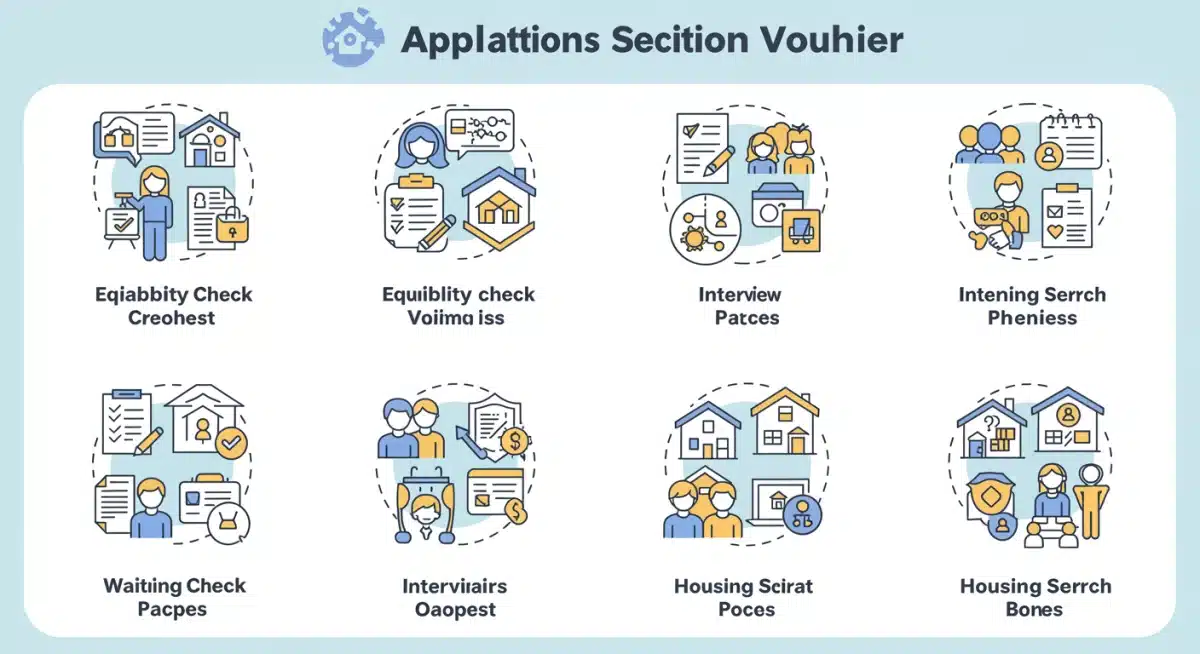
Navigating the Application Process: Tips and Best Practices
Applying for federal housing assistance can be a lengthy and sometimes complex process. However, being well-prepared and understanding the steps involved can significantly improve your chances of success. Patience, thoroughness, and persistence are key when dealing with long waiting lists and detailed documentation requirements.
The first and most crucial step is to identify the specific programs you might be eligible for and locate the relevant administering agencies, usually your local Public Housing Authority (PHA). Each program has unique eligibility criteria, so a careful review of requirements is essential before beginning an application.
Essential Application Tips
To streamline your application process and avoid common pitfalls, consider these best practices. Gathering all necessary documents beforehand can save considerable time and reduce stress.
- Gather Documentation: Collect all required documents such as birth certificates, social security cards, proof of income, tax returns, and previous rental history.
- Be Thorough and Accurate: Provide complete and truthful information on all application forms. Any discrepancies can lead to delays or disqualification.
- Stay Organized: Keep copies of all submitted documents and correspondence with the PHA or housing agency.
- Follow Up: Periodically check on the status of your application, especially if you are on a waiting list. Update your contact information immediately if it changes.
- Seek Assistance: If you find the process overwhelming, consider seeking help from housing counselors or non-profit organizations specializing in housing assistance.
Remember that the demand for housing assistance often exceeds the supply, leading to competitive application processes. Presenting a well-organized and complete application is vital for navigating this competitive landscape effectively.
Financial Impact and Long-Term Benefits of Housing Assistance
The financial impact of federal housing assistance programs on recipients is profound, extending far beyond simply reducing monthly rent payments. These programs fundamentally alter the financial stability of low-income households, freeing up resources that can then be allocated to other essential needs like food, healthcare, and education.
For families, the reduction in housing costs can mean the difference between poverty and self-sufficiency. It allows parents to invest in their children’s future, pursue educational opportunities, and improve their overall quality of life. This financial relief acts as a springboard for upward mobility, breaking cycles of intergenerational poverty.
Broader Economic and Social Benefits
The benefits of housing assistance also ripple through the broader economy and society. Stable housing is intrinsically linked to better health outcomes, improved educational attainment for children, and reduced crime rates. When families are securely housed, they are less likely to experience chronic stress, which can lead to various health issues.
- Improved Health: Stable housing correlates with better physical and mental health.
- Educational Attainment: Children in stable homes perform better in school.
- Economic Contribution: Reduced housing burden allows for increased spending on goods and services, boosting local economies.
- Reduced Homelessness: Direct impact on reducing the number of individuals and families experiencing homelessness.
Ultimately, investing in housing assistance is an investment in human capital and community well-being. It fosters a more equitable society where everyone has the opportunity to thrive, reinforcing the idea that a stable home is a fundamental right and a foundation for a productive life.
Future Outlook: Changes and Challenges in 2025
As we look towards 2025, the landscape of federal housing assistance programs continues to evolve, shaped by economic conditions, legislative priorities, and the ongoing demand for affordable housing. While the core structure of programs like Section 8 is expected to remain, adjustments in funding, eligibility criteria, and administrative processes are always a possibility.
One of the primary challenges facing Housing Assistance Programs 2025 is the persistent shortage of affordable housing units across the United States. This scarcity often leads to long waiting lists for vouchers and public housing, underscoring the need for increased investment in housing development and preservation. Advocacy efforts are continuously underway to secure more funding and expand the reach of these vital programs.
Potential Legislative and Policy Shifts
Policy discussions around housing affordability often center on several key areas. These include proposals to increase the number of available vouchers, expand eligibility to more low-income families, and streamline the application and administration processes to reduce burdens on both applicants and housing agencies.
- Increased Funding: Calls for greater federal investment in housing programs to meet demand.
- Regulatory Reforms: Potential changes to make programs more efficient and accessible.
- Support for Special Populations: Continued focus on housing solutions for veterans, the elderly, and individuals with disabilities.
- Sustainable Housing: Emphasis on environmentally friendly and resilient housing solutions.
Staying informed about these potential changes is crucial for both current recipients and prospective applicants. Government websites, local PHAs, and reputable housing advocacy groups are excellent resources for the most up-to-date information regarding Housing Assistance Programs 2025 and beyond.
| Key Program | Brief Description |
|---|---|
| Section 8 Vouchers | Assists low-income families in affording private market housing, with subsidies paid to landlords. |
| Public Housing | Affordable rental housing owned and managed by local Public Housing Agencies (PHAs). |
| Project-Based Rental Assistance (PBRA) | Subsidies tied to specific housing units, offering reduced rent in designated properties. |
| Emergency Rental Assistance | Short-term financial aid for rent and utilities to prevent eviction and homelessness. |
Frequently Asked Questions About Housing Assistance Programs
Section 8 (Housing Choice Vouchers) provides subsidies for tenants to find housing in the private market, with the assistance being portable. Public Housing involves units owned and managed by local PHAs, where tenants rent directly from the agency.
You apply for Section 8 vouchers through your local Public Housing Agency (PHA). Due to high demand, you will likely be placed on a waiting list, which can vary significantly in length depending on your location.
Income limits are set by HUD annually and vary by location and family size. Generally, households must earn below 50% of the median income for their area, with priority often given to those below 30%.
Yes, other programs include Project-Based Rental Assistance (PBRA), which ties subsidies to specific units, and Emergency Rental Assistance (ERA) for short-term financial aid, among others for homelessness prevention.
Commonly required documents include proof of income (pay stubs, tax returns), identification for all household members, birth certificates, Social Security cards, and previous rental history. Specific requirements may vary by program and PHA.
Conclusion
Navigating the complex world of federal housing assistance programs can be challenging, but understanding the various options available, particularly Housing Assistance Programs 2025, is a crucial step toward securing stable and affordable housing. From Section 8 vouchers to public housing and emergency relief, these initiatives provide essential support to millions of Americans. By familiarizing yourself with eligibility requirements, application processes, and the long-term benefits, you can effectively access the resources designed to foster financial stability and improve overall quality of life.