Mastering High-Interest Debt: A 2026 Framework for 15% Reduction

Mastering High-Interest Debt: A 2026 Framework for 15% Reduction
Are you feeling the weight of high-interest debt? The rising cost of living, coupled with often aggressive interest rates on credit cards, personal loans, and other forms of borrowing, can make achieving financial stability feel like an uphill battle. As we navigate 2026, the landscape of personal finance continues to evolve, presenting both challenges and opportunities for those committed to taking control of their financial future. This comprehensive guide is designed to provide you with a practical, actionable framework for high-interest debt reduction, with the ambitious yet achievable goal of cutting your high-interest debt by a significant 15% this year.
The journey to financial freedom often begins with confronting and dismantling high-interest debt. This isn’t just about paying off balances; it’s about understanding the mechanisms of debt, developing strategic repayment plans, and cultivating sustainable financial habits. We’ll delve into a multi-faceted approach that combines proven methodologies with forward-thinking strategies tailored for the current economic climate. Whether you’re drowning in credit card debt, struggling with a high-interest personal loan, or simply looking to optimize your debt repayment strategy, this article is your roadmap.
Our focus on a 15% reduction isn’t arbitrary. It’s a tangible, measurable goal that provides motivation and a clear benchmark for success. Achieving this level of reduction can significantly alleviate financial stress, free up cash flow, and build momentum for even greater financial triumphs in the future. Let’s embark on this journey together, transforming the daunting task of debt reduction into an empowering step towards lasting financial well-being.
Understanding the Beast: What is High-Interest Debt?
Before we can conquer high-interest debt, it’s crucial to understand what it is and why it poses such a significant threat to your financial health. High-interest debt typically refers to any loan or credit product with an annual percentage rate (APR) significantly above the prime lending rate or the average interest rate for secure loans like mortgages. Common culprits include:
- Credit Card Debt: Often carries APRs ranging from 15% to 25% or even higher, making it one of the most expensive forms of borrowing.
- Personal Loans: While sometimes offering lower rates than credit cards, unsecured personal loans can still have high APRs, especially for individuals with lower credit scores.
- Payday Loans and Title Loans: These are notorious for their exorbitant interest rates, sometimes reaching triple digits, and should generally be avoided at all costs.
- Store Credit Cards: Similar to general credit cards, but often with even higher introductory APRs and less favorable terms.
The danger of high-interest debt lies in its compounding nature. The interest on your balance can quickly accumulate, making it feel like you’re paying a lot but barely making a dent in the principal. This cycle can be incredibly discouraging and lead to a sense of being trapped. Our framework aims to break this cycle by targeting the most expensive debt first, minimizing the impact of compounding interest, and accelerating your path to debt freedom.
Step 1: The Financial MRI – Assessing Your Current Debt Landscape
The first and most critical step in any effective high-interest debt reduction plan is a thorough assessment of your current financial situation. You cannot effectively fight an enemy you don’t fully understand. This involves more than just knowing your total debt; it requires a deep dive into the specifics of each debt you hold.
Gathering All Debt Information
Compile a detailed list of all your debts. For each debt, record the following:
- Lender: Who do you owe money to?
- Current Balance: The exact amount you still owe.
- Interest Rate (APR): This is arguably the most crucial piece of information for high-interest debt.
- Minimum Monthly Payment: The smallest amount you’re required to pay each month.
- Due Date: When is the payment due?
- Any Fees: Late payment fees, annual fees, etc.
Organize this information in a spreadsheet or a dedicated notebook. Seeing all your debts laid out clearly can be illuminating, and sometimes, a little overwhelming. But this is a necessary step towards clarity and control.
Calculating Your Debt-to-Income Ratio
Your debt-to-income (DTI) ratio is a key indicator of your financial health. It’s calculated by dividing your total monthly debt payments by your gross monthly income. Lenders use this ratio to assess your ability to manage monthly payments and repay debts. A high DTI (above 36%) can signal financial strain and make it harder to get new credit or favorable interest rates. Understanding your DTI will give you a realistic picture of your current financial burden and help you set achievable goals for high-interest debt reduction.
Analyzing Your Spending Habits
Where is your money going each month? A detailed review of your bank statements, credit card statements, and receipts for the past 3-6 months will reveal your spending patterns. Categorize your expenses into essential (housing, utilities, groceries) and non-essential (dining out, entertainment, subscriptions). This analysis is vital for identifying areas where you can cut back to free up more money for debt repayment.
Step 2: Crafting Your Attack Plan – Strategic Repayment Methods
Once you have a clear picture of your debt, it’s time to choose the most effective strategy for repayment. Two popular methods stand out for their effectiveness in high-interest debt reduction:
The Debt Avalanche Method
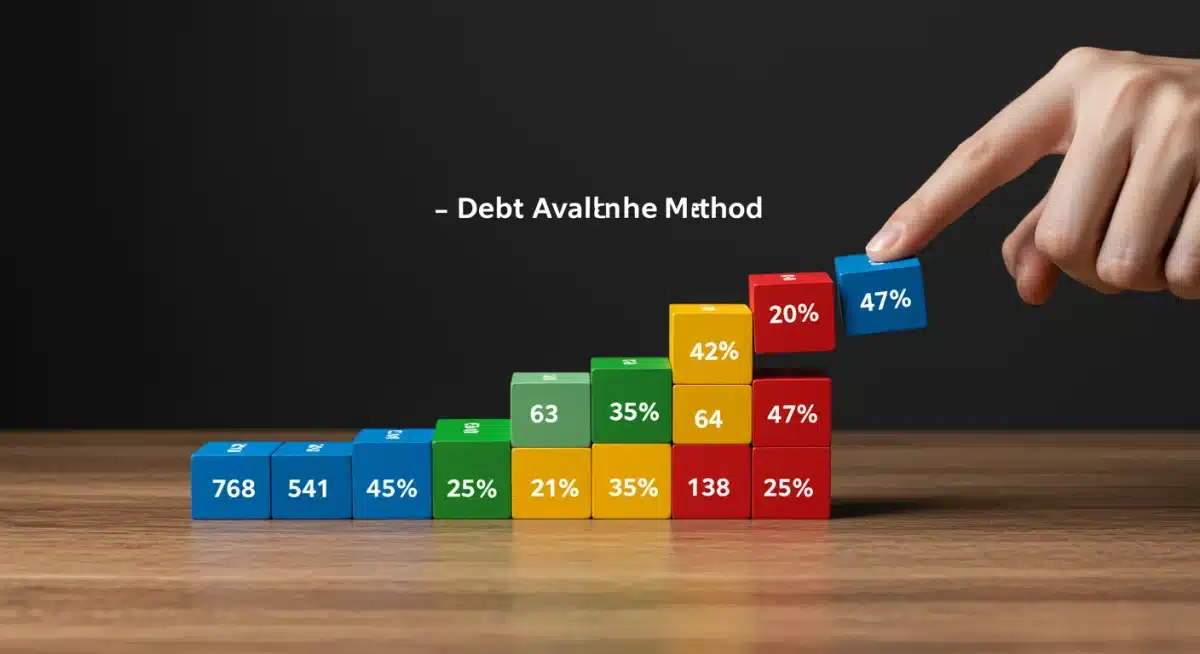
The debt avalanche method is statistically the most efficient way to pay off debt, as it minimizes the total interest paid over time. Here’s how it works:
- List all your debts from the highest interest rate to the lowest, regardless of the balance.
- Make minimum payments on all debts except the one with the highest interest rate.
- Throw all extra money you can find (from budgeting, side hustles, etc.) at the debt with the highest interest rate.
- Once the highest-interest debt is paid off, take the money you were paying on that debt (minimum payment + extra money) and apply it to the debt with the next highest interest rate.
- Repeat this process until all your debts are eliminated.
This method saves you the most money in interest and accelerates your debt-free date. It requires discipline but offers significant financial rewards.
The Debt Snowball Method
While the debt avalanche is mathematically superior, the debt snowball method offers psychological advantages. It focuses on building momentum and motivation:
- List all your debts from the smallest balance to the largest, regardless of the interest rate.
- Make minimum payments on all debts except the one with the smallest balance.
- Apply all extra money to the debt with the smallest balance.
- Once the smallest debt is paid off, take the money you were paying on that debt (minimum payment + extra money) and apply it to the debt with the next smallest balance.
- Continue this process until all debts are gone.
The quick wins of eliminating smaller debts can provide a powerful psychological boost, keeping you motivated on your high-interest debt reduction journey. Choose the method that best aligns with your personality and financial discipline.
Step 3: Supercharging Your Repayment – Finding Extra Funds
To achieve a 15% high-interest debt reduction this year, you’ll likely need to do more than just make minimum payments. Finding extra money to throw at your debt is crucial. This step involves both cutting expenses and increasing income.
Aggressive Budgeting and Expense Reduction
Revisit your spending analysis from Step 1. Can you cut back on non-essential expenses? Even small, consistent reductions can add up over time. Consider:
- Dining Out: Cook at home more often. Meal planning can save significant money.
- Subscriptions: Review all your monthly subscriptions (streaming services, gym memberships, apps). Cancel those you don’t frequently use.
- Entertainment: Look for free or low-cost entertainment options.
- Transportation: Can you carpool, use public transport, or walk/bike more often?
- Shopping: Practice mindful spending. Ask yourself if you truly need an item before purchasing.
Create a strict budget that prioritizes debt repayment. The goal here is to free up as much cash as possible to accelerate your high-interest debt reduction.

Boosting Your Income
Sometimes, cutting expenses isn’t enough, or you’ve already cut to the bone. In such cases, increasing your income becomes the next logical step:
- Side Hustles: Explore opportunities for freelance work, gig economy jobs (delivery services, ride-sharing), online tutoring, or selling crafts/services.
- Overtime: If available at your current job, picking up extra hours can provide a quick influx of cash for debt repayment.
- Selling Unused Items: Declutter your home and sell items you no longer need or use on platforms like eBay, Facebook Marketplace, or local consignment shops.
- Negotiate a Raise: If you’re a valuable employee, consider negotiating a raise at your current job.
Every extra dollar you earn and dedicate to your high-interest debt will bring you closer to your 15% reduction goal and beyond.
Step 4: Leveraging Financial Tools and Strategies for 2026
Beyond budgeting and repayment methods, several financial tools and strategies can significantly aid your high-interest debt reduction efforts in 2026. These options can help you lower interest rates, consolidate payments, and simplify your debt management.
Balance Transfer Credit Cards
If you have excellent credit, a balance transfer credit card can be a powerful tool. These cards offer a 0% introductory APR for a period (typically 12-21 months) on transferred balances. This allows you to pay down your principal without accruing additional interest during the promotional period. However, be mindful of:
- Transfer Fees: Most balance transfers come with a fee, usually 3-5% of the transferred amount.
- Promotional Period Expiration: Ensure you can pay off a significant portion, if not all, of the transferred balance before the 0% APR expires, or you’ll face high interest rates again.
- Credit Score Impact: Opening a new credit line can temporarily ding your credit score.
Debt Consolidation Loans
A debt consolidation loan combines multiple high-interest debts into a single new loan, often with a lower interest rate and a fixed monthly payment. This can simplify your payments and potentially save you money on interest. Consider:
- Interest Rate: Ensure the new loan’s interest rate is significantly lower than the average of your current high-interest debts.
- Loan Term: A longer loan term might mean lower monthly payments but could result in paying more interest over the life of the loan.
- Fees: Look out for origination fees or other charges associated with the loan.
Negotiating with Creditors
Don’t be afraid to reach out to your creditors, especially if you’re struggling to make payments. They might be willing to work with you by:
- Lowering Your Interest Rate: Especially if you have a good payment history.
- Waiving Fees: They might waive late fees if you ask respectfully.
- Setting Up a Payment Plan: A more manageable payment schedule can prevent default.
Be honest about your situation and proactive in seeking solutions. Even a small reduction in your interest rate can make a substantial difference in your high-interest debt reduction journey.
Credit Counseling Services
If you feel overwhelmed, non-profit credit counseling agencies can provide guidance. They can help you create a budget, develop a debt management plan (DMP), and even negotiate with creditors on your behalf. A DMP typically involves making one monthly payment to the agency, which then distributes the funds to your creditors. These services can be invaluable for navigating complex debt situations.
Step 5: Building Sustainable Habits for Long-Term Financial Health
Achieving a 15% high-interest debt reduction is a significant accomplishment, but true financial freedom is about more than just paying off debt. It’s about building sustainable habits that prevent future debt accumulation and foster long-term financial health.
Establishing an Emergency Fund
One of the primary reasons people fall into high-interest debt is unexpected expenses. An emergency fund acts as a financial safety net, preventing you from relying on credit cards or high-interest loans when unforeseen costs arise. Aim to save at least 3-6 months’ worth of essential living expenses in an easily accessible savings account.
Continuing to Budget and Track Spending
Budgeting isn’t a temporary measure for debt repayment; it’s a lifelong financial habit. Continue to monitor your income and expenses to ensure you’re living within your means and allocating funds effectively towards your financial goals, whether that’s saving, investing, or continued debt reduction.
Mindful Credit Card Use
Once your high-interest debt is under control, practice mindful credit card use. If you choose to use credit cards, pay off your balance in full every month to avoid accruing interest. Think of credit cards as a convenience tool, not an extension of your income.
Regular Financial Review
Schedule regular financial check-ups (e.g., quarterly or semi-annually) to review your budget, debt progress, savings, and overall financial goals. Adjust your strategies as your income, expenses, and life circumstances change.
Measuring Your Progress Towards 15% Reduction
How do you know if you’re on track to hit your 15% high-interest debt reduction goal? Regular tracking is essential. Let’s say your total high-interest debt at the beginning of 2026 was $10,000. Your goal is to reduce this by $1,500 by the end of the year. This means you need to pay an average of $125 extra towards your principal each month, beyond your minimum payments.
Keep a running tally of your principal balance for each high-interest debt. Celebrate small victories as you pay down individual accounts. Visualizing your progress, perhaps with a debt thermometer or a spreadsheet, can be incredibly motivating.
If you find yourself falling behind, reassess your budget and income-boosting strategies. Don’t get discouraged; instead, view it as an opportunity to refine your approach. The key is consistency and commitment.
Avoiding Common Pitfalls in Debt Reduction
The path to high-interest debt reduction is rarely linear. Be aware of common obstacles that can derail your progress:
- Lifestyle Creep: As your income increases, resist the urge to immediately upgrade your lifestyle. Continue to live below your means and direct extra funds towards debt or savings.
- Ignoring the Budget: A budget is only effective if you stick to it. Regularly review and adjust it to ensure it remains realistic and supportive of your goals.
- Taking on New Debt: While actively paying down high-interest debt, avoid taking on any new unnecessary debt. This can undo all your hard work.
- Lack of an Emergency Fund: As mentioned, without an emergency fund, unexpected expenses can quickly push you back into debt.
- Giving Up: Debt reduction is a marathon, not a sprint. There will be challenging months, but perseverance is key. Celebrate progress and learn from setbacks.
The Psychological Impact of Debt and Freedom
Beyond the numbers, high-interest debt carries a significant psychological burden. Stress, anxiety, and even depression can be side effects of overwhelming debt. Conversely, actively working towards high-interest debt reduction can be incredibly empowering.
Each payment made, each balance reduced, contributes to a sense of control and accomplishment. As you chip away at your debt, you’ll likely notice a reduction in stress and an increase in overall well-being. This psychological uplift is a powerful motivator and a testament to the transformative power of financial discipline.
Conclusion: Your Path to a Debt-Reduced 2026 and Beyond
Achieving a 15% high-interest debt reduction in 2026 is an ambitious yet entirely attainable goal. By systematically assessing your debt, implementing strategic repayment methods like the debt avalanche, aggressively finding extra funds through budgeting and income generation, and leveraging smart financial tools, you can make significant strides toward financial freedom.
Remember, this journey is about more than just numbers; it’s about transforming your relationship with money, building resilience, and securing a more stable and prosperous future. The framework outlined in this guide provides a clear roadmap, but your commitment and consistency are the driving forces behind its success.
Start today. Take that first step to understand your debt, choose your repayment strategy, and commit to finding those extra dollars. The rewards of reducing your high-interest debt – increased financial flexibility, reduced stress, and the confidence of control – are well worth the effort. Here’s to a debt-reduced and financially empowered 2026!