Financial Planning for Social Security: Maximize 2025 Benefits

Financial planning for Social Security in 2025 involves understanding claiming strategies, maximizing benefits, and coordinating with other retirement income sources to ensure financial security.
Navigating the complexities of Social Security can be daunting, especially when planning for retirement. Financial planning for Social Security: Maximizing Your Benefits and Claiming Strategies in 2025 requires a strategic approach to ensure you receive the maximum benefits you’re entitled to. This guide provides a comprehensive overview of the key considerations and strategies to help you make informed decisions.
Understanding the Basics of Social Security
Social Security is a cornerstone of retirement income for many Americans. Understanding its basics is crucial for effective financial planning. This section provides a clear overview of how Social Security works and its role in your overall retirement strategy.
What is Social Security?
Social Security is a federal insurance program funded through payroll taxes. It provides benefits to retirees, disabled individuals, and survivors of deceased workers. The amount of your benefit is based on your earnings history and the age at which you begin claiming.
Key Components of Social Security
Social Security comprises several components, including retirement benefits, disability benefits, and survivor benefits. Each has its own eligibility requirements and benefit calculation methods. Understanding these components can help you plan more effectively.
- Retirement Benefits: Available to individuals who have worked and paid Social Security taxes for a certain period and have reached retirement age.
- Disability Benefits: Provided to individuals who are unable to work due to a medical condition that is expected to last at least one year or result in death.
- Survivor Benefits: Paid to surviving spouses, children, and, in some cases, parents of deceased workers.
Social Security benefits are designed to provide a safety net, but they may not be sufficient to cover all retirement expenses. Therefore, integrating Social Security planning into your broader financial strategy is essential.
Strategies for Maximizing Your Social Security Benefits
There are several strategies you can employ to maximize your Social Security benefits. This section explores the most effective tactics, helping you make informed decisions about when and how to claim.
Delaying Your Claim
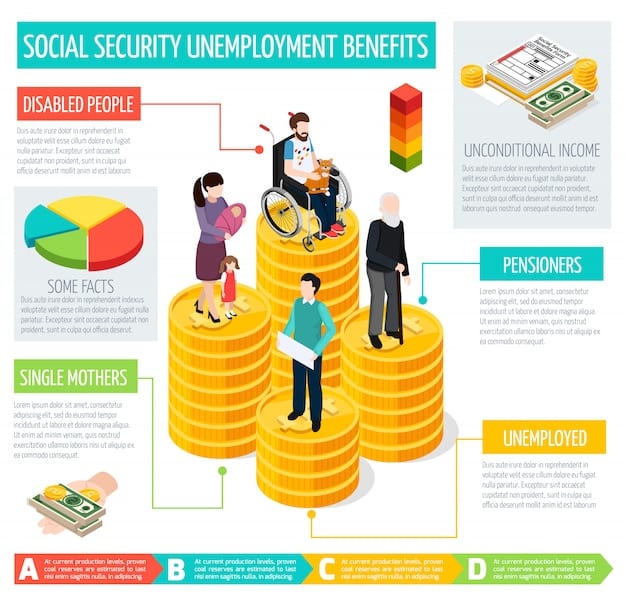
One of the most effective ways to maximize your Social Security benefits is to delay claiming them. For each year you delay beyond your full retirement age (FRA), up to age 70, your benefits increase by approximately 8% per year. This can result in a significantly larger monthly payment.
Understanding Full Retirement Age (FRA)
Your full retirement age (FRA) is the age at which you are entitled to receive 100% of your Social Security retirement benefits. For those born between 1943 and 1954, the FRA is 66. For those born in 1960 or later, the FRA is 67.
- Claiming at Age 62: Results in a reduced benefit, typically around 25-30% less than your FRA benefit.
- Claiming at FRA: Entitles you to 100% of your retirement benefit.
- Claiming at Age 70: Provides the maximum possible benefit, which can be 24-32% higher than your FRA benefit.
Delaying your claim can be particularly beneficial if you anticipate living a long life or if you don’t need the income immediately. However, it’s essential to consider your individual circumstances and financial needs.
Coordinating Social Security with Other Retirement Income
Social Security is just one piece of the retirement income puzzle. Coordinating it with other sources of income, such as pensions, 401(k)s, and IRAs, is vital for a secure retirement.
Integrating Social Security with Pensions
If you have a pension, understanding how it interacts with Social Security is crucial. Some pensions may affect your Social Security benefits through the Windfall Elimination Provision (WEP) or the Government Pension Offset (GPO).
Managing 401(k)s and IRAs
Your 401(k) and IRA balances can significantly impact your retirement income. Coordinating withdrawals from these accounts with your Social Security benefits can help you minimize taxes and maximize your overall income.
- Tax Planning: Consider the tax implications of withdrawing from different accounts. Social Security benefits may be taxable, depending on your overall income.
- Withdrawal Strategies: Develop a withdrawal strategy that balances your current income needs with the long-term sustainability of your retirement savings.
- Diversification: Ensure your retirement portfolio is well-diversified to mitigate risk and provide a steady stream of income.
Coordinating Social Security with other retirement income sources requires careful planning and consideration of your individual circumstances. Consulting with a financial advisor can help you develop a comprehensive retirement income strategy.
Understanding Spousal and Survivor Benefits
Social Security also provides benefits for spouses and survivors of deceased workers. Understanding these benefits is essential for couples and families planning for the future.
Spousal Benefits
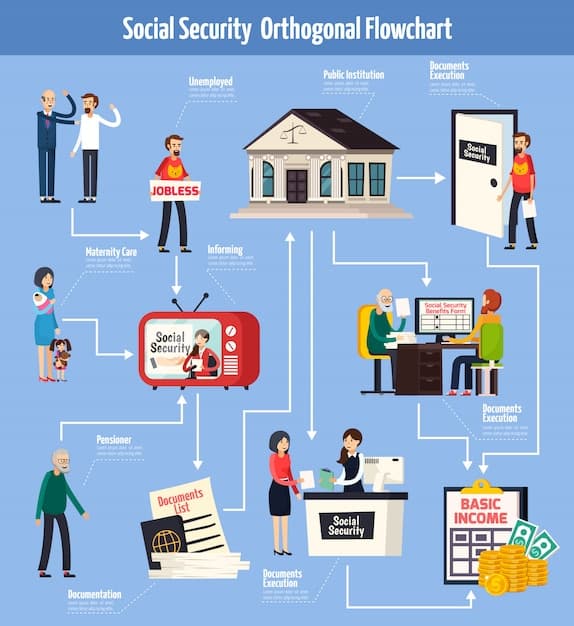
Spousal benefits are available to individuals who are married to someone entitled to Social Security retirement or disability benefits. The amount of the spousal benefit depends on the worker’s earnings history and the spouse’s age at the time of claiming.
Survivor Benefits
Survivor benefits are paid to surviving spouses and children of deceased workers. These benefits can provide crucial financial support during a difficult time. The amount of the survivor benefit depends on the deceased worker’s earnings history and the survivor’s relationship to the worker.
- Eligibility Requirements: Understanding the specific eligibility requirements for spousal and survivor benefits is vital for claiming these benefits.
- Benefit Calculation: The calculation of spousal and survivor benefits can be complex. Consulting with a Social Security representative or financial advisor can help you understand your potential benefits.
- Planning Considerations: Consider how spousal and survivor benefits fit into your overall financial plan. These benefits can provide important income and security for couples and families.
Spousal and survivor benefits are important components of Social Security that can provide valuable support for families. Understanding these benefits is essential for comprehensive financial planning.
Common Mistakes to Avoid in Social Security Planning
Planning for Social Security can be complex, and there are several common mistakes that individuals make. Avoiding these pitfalls can help you maximize your benefits and secure your financial future.
Claiming Too Early
One of the most common mistakes is claiming Social Security benefits too early. While it may be tempting to start receiving income as soon as possible, claiming before your full retirement age can significantly reduce your monthly payment.
Not Coordinating with Your Spouse
For married couples, failing to coordinate Social Security claiming strategies can be a costly mistake. Coordinating your claiming decisions can help you maximize your combined benefits and provide for your spouse in the event of your death.
- Ignoring the Windfall Elimination Provision (WEP): The WEP can reduce your Social Security benefits if you also receive a pension from a job where Social Security taxes were not withheld.
- Failing to Understand the Government Pension Offset (GPO): The GPO can reduce your spousal or survivor benefits if you receive a government pension.
- Not Reviewing Your Earnings Record: Regularly reviewing your Social Security earnings record can help you identify and correct any errors that could affect your benefits.
Avoiding these common mistakes requires careful planning and attention to detail. Consulting with a financial advisor can help you navigate the complexities of Social Security and make informed decisions.
Staying Informed About Social Security Changes in 2025
Social Security laws and regulations can change over time, so staying informed about the latest developments is essential for effective financial planning. This section provides an overview of potential changes in 2025 and how they might affect your benefits.
Potential Legislative Changes
Congress may enact changes to Social Security laws that could impact benefit levels, eligibility requirements, or the claiming age. Staying informed about these potential changes can help you adjust your financial plans accordingly.
Cost-of-Living Adjustments (COLAs)
Social Security benefits are subject to annual cost-of-living adjustments (COLAs) to help protect beneficiaries from inflation. Understanding how COLAs are calculated and applied can help you anticipate future benefit increases.
- Reviewing Official Social Security Publications: The Social Security Administration (SSA) publishes numerous resources to help you understand your benefits and stay informed about changes.
- Consulting with Financial Professionals: Financial advisors and retirement planners can provide valuable insights into Social Security planning and help you navigate potential changes.
- Using Online Resources: Numerous websites and online tools can help you estimate your future Social Security benefits and explore different claiming scenarios.
Staying informed about Social Security changes is an ongoing process that requires diligence and attention. By monitoring legislative developments, understanding COLAs, and utilizing available resources, you can make informed decisions about your retirement planning
| Key Point | Brief Description |
|---|---|
| 💰 Maximize Benefits | Delay claiming until age 70 to increase benefits. |
| 👵 Spousal Benefits | Understand how spousal benefits can impact your retirement income. |
| 📈 Coordinate Income | Plan how Social Security integrates with pensions and savings. |
| ⚠️ Avoid Mistakes | Don’t claim too early or ignore pension impacts. |
Frequently Asked Questions (FAQ)
▼
The best age to claim Social Security depends on your financial situation and health. Delaying until age 70 maximizes your benefits, but claiming earlier may be necessary if you need the income or have health concerns.
▼
Social Security benefits are calculated based on your average indexed monthly earnings (AIME) over your 35 highest-earning years. This AIME is then used to determine your primary insurance amount (PIA).
▼
Yes, you can work while receiving Social Security benefits, but if you’re under full retirement age, your benefits may be reduced if your earnings exceed certain limits. After FRA, there’s no earnings limit.
▼
The WEP can reduce your Social Security benefits if you also receive a pension from a job where Social Security taxes were not withheld. This primarily affects those with government or foreign pensions.
▼
If you’re divorced, you may be eligible for spousal benefits based on your ex-spouse’s earnings record, provided you were married for at least 10 years and are not currently married.
Conclusion
Effective financial planning for Social Security: Maximizing Your Benefits and Claiming Strategies in 2025 is critical for a secure retirement. By understanding the basics, employing smart claiming strategies, and coordinating with other income sources, you can optimize your benefits and ensure financial stability in your golden years. Staying informed and seeking professional advice are key to navigating the complexities of Social Security.