Financial Planning for Business Owners: Maximize Savings & Minimize Taxes in 2025

Financial planning for business owners in 2025 requires a proactive approach to maximize retirement savings and minimize tax liabilities through strategic investment, retirement plans, and tax-efficient strategies.
As a business owner, effectively planning your finances is paramount, especially when looking ahead to 2025. Strategic financial planning for business owners: maximizing retirement savings and minimizing taxes in 2025 requires a comprehensive approach, including maximizing retirement savings and minimizing tax liabilities. Let’s dive into how you can navigate this landscape.
Understanding the 2025 Financial Landscape for Business Owners
Navigating the financial arena as a business owner requires a deep understanding of the evolving economic environment. With 2025 on the horizon, several factors are poised to influence financial planning strategies.
These include potential changes in tax laws, fluctuating interest rates, and economic forecasts that could impact investment returns and business profitability. Staying informed about these trends is crucial for making well-informed decisions.
Anticipating Tax Law Changes
Tax laws are constantly evolving, and business owners must stay abreast of any upcoming changes. Tax policies for 2025 could significantly affect how businesses structure their finances and plan for retirement. Understanding these potential shifts will help business owners minimize their tax liabilities.
Economic Forecasts and Investment Strategies
Economic forecasts provide valuable insights into future market conditions, allowing business owners to tailor their investment strategies accordingly. Monitoring economic indicators such as GDP growth, inflation rates, and unemployment figures can help you make informed decisions about your retirement savings and investment portfolios.
- Stay updated with economic forecasts from reputable sources.
- Consult with a financial advisor to align investment strategies with economic trends.
- Diversify investments to mitigate risks associated with economic fluctuations.
Therefore, understanding the 2025 financial landscape is about staying informed and proactive. By anticipating potential changes and making data-driven decisions, business owners can effectively navigate the complexities of financial planning and ensure a secure financial future.
Maximizing Retirement Savings: Key Strategies for 2025
One of the most critical aspects of financial planning for business owners: maximizing retirement savings and minimizing taxes in 2025 is creating a robust retirement savings strategy. There are various options available, each with its unique advantages and considerations.
Choosing the right retirement plan can make a substantial difference in the amount of wealth you accumulate by the time you retire. Here are some key strategies to consider.
SEP IRAs: A Simple Solution
Simplified Employee Pension (SEP) IRAs are a popular choice for self-employed individuals and small business owners. They offer ease of administration and allow for significant contributions, based on a percentage of your business income. SEP IRAs can be set up easily, making them accessible.
Solo 401(k) Plans: Dual Role Advantage
A Solo 401(k) plan allows you to contribute both as an employee and as an employer, significantly increasing your potential savings. This makes it an attractive option for those looking to maximize their retirement contributions. With a higher contribution limit, it allows you to substantially boost retirement savings.

Defined Benefit Plans: Predictable Income Streams
Defined benefit plans offer predictable income streams during retirement, making them a good option for those seeking security. These plans require careful management and actuarial calculations, but they can provide guaranteed retirement income. Despite their complexity, they offer stability and predictability.
- Carefully evaluate the pros and cons of each retirement plan.
- Consider your current income and future financial goals.
- Consult with a financial advisor to determine the best fit for your needs.
Maximizing retirement savings involves selecting the right retirement plan, making consistent contributions, and regularly reviewing your strategy to ensure it aligns with your financial goals. The appropriate plan can make a big difference in a secure retirement future.
Minimizing Taxes: Effective Tax Planning for Business Owners in 2025
Smart tax planning is another vital component of financial planning for business owners: maximizing retirement savings and minimizing taxes in 2025. Strategic tax management can protect your earnings, ultimately helping you keep more of your hard-earned money.
Let’s explore some effective tax strategies.
Deductions and Credits
Taking advantage of eligible deductions and credits is one of the simplest ways to reduce your tax burden. Business expenses, home office deductions, and certain educational expenses can all lower your taxable income.
Strategic Timing of Income and Expenses
Strategically timing your income and expenses can help you manage your tax liabilities across different tax years. Deferring income to a later year or accelerating deductible expenses can result in significant tax savings. Proper planning can optimize tax outcomes and reduce overall liabilities.
Entity Structuring for Tax Efficiency
The legal structure of your business—whether it’s a sole proprietorship, partnership, S corporation, or C corporation—can significantly impact your tax obligations. Each structure has different tax implications that can affect your overall financial health. Choosing the right structure can lead to considerable tax advantages.
- Keep accurate records of all business expenses.
- Consult with a tax professional to identify applicable deductions and credits.
- Review and adjust your business structure for optimal tax efficiency.
For minimizing taxes proactively, it requires understanding and implementing effective tax-saving strategies. Consistently implement these strategies to efficiently reduce tax obligations and retain more capital for reinvestment or personal financial goals.
Investment Strategies: Balancing Risk and Return in 2025
Effective investment strategies are crucial for achieving both short-term and long-term financial goals. Balancing risk and return involves carefully assessing your risk tolerance, time horizon, and investment objectives.
A well-diversified portfolio helps you mitigate risk while maximizing potential returns. Here’s how to navigate this balance.
Diversification
Diversification involves spreading your investments across various asset classes, industries, and geographic regions. This helps reduce the impact of any single investment’s poor performance on your overall portfolio. A diversified portfolio is more resilient to market fluctuations.
Asset Allocation
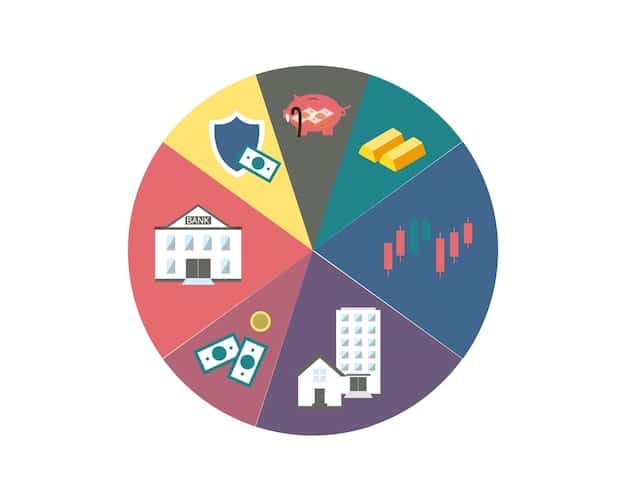
Asset allocation involves determining the appropriate mix of assets in your portfolio, such as stocks, bonds, and real estate. Your asset allocation should align with your risk tolerance and investment time horizon. A targeted asset allocation can optimize returns while managing risk.
Regular Portfolio Reviews
Regularly reviewing and rebalancing your portfolio is essential to ensure it remains aligned with your financial goals. Market conditions and personal circumstances change over time, so your investment strategy should adapt accordingly. Adjustments ensure the portfolio optimizes performance according to current economic conditions.
- Assess your risk tolerance and investment timeline.
- Diversify your portfolio across various asset classes.
- Rebalance your portfolio periodically to maintain your desired asset allocation.
Balancing risk and return requires a careful approach tailored to your individual circumstances. A well-thought-out investment strategy can help you achieve your financial goals while managing risk effectively. Consider individual circumstances and economic trends.
Estate Planning: Protecting Your Legacy in 2025
Estate planning is a critical aspect of financial planning for business owners: maximizing retirement savings and minimizing taxes in 2025. It ensures your assets are distributed according to your wishes and helps minimize potential estate taxes and complications for your heirs.
Estate planning protects your legacy.
Wills and Trusts
Creating a will or trust is fundamental to estate planning. A will specifies how your assets will be distributed upon your death, while a trust can provide more flexibility and control over asset management and distribution. Both documents ensure your assets are managed and distributed according to your wishes.
Beneficiary Designations
Carefully designating beneficiaries for your retirement accounts, life insurance policies, and other assets ensures they are transferred directly to your intended recipients without going through probate. Proper beneficiary designations simplify the transfer of assets.
Minimizing Estate Taxes
Estate taxes can significantly reduce the value of your estate. Strategies such as gifting assets, establishing trusts, and utilizing available exemptions can help minimize these taxes. Effective strategies can protect your wealth as it passes to your heirs.
- Create or update your will or trust documents.
- Review and update beneficiary designations regularly.
- Consult with an estate planning attorney to minimize estate taxes.
Protecting your legacy involves thoughtful estate planning that addresses your specific needs and goals. Planning helps to ensure your assets are distributed according to your wishes and minimizes potential taxes and complications.
Working with Financial Advisors: The Path to Success in 2025
Navigating the complexities of financial planning can be overwhelming, but working with a qualified financial advisor can make the process more manageable and effective. A financial advisor can provide personalized guidance, helping you make informed decisions and achieve your financial goals.
Working with a financial advisor is the bridge to success.
Benefits of Professional Guidance
A financial advisor can offer expert advice tailored to your specific financial situation. They can help you develop a comprehensive financial plan, manage your investments, and navigate tax and estate planning complexities. Professional guidance helps you make informed decisions.
Choosing the Right Advisor
Selecting the right financial advisor involves considering their credentials, experience, and fee structure. You should also ensure they have a fiduciary duty to act in your best interest. Choosing the right advisor is crucial for a successful partnership.
Ongoing Financial Planning
Financial planning is not a one-time event but an ongoing process. Regular meetings with your financial advisor can help you stay on track, adjust your strategies as needed, and ensure your financial plan remains aligned with your goals. Continual planning is crucial in achieving long-term financial health.
- Seek recommendations from trusted sources.
- Interview multiple advisors before making a decision.
- Establish clear communication and expectations with your advisor.
Working with a financial advisor can provide invaluable support and expertise, increasing your chances of achieving financial success. Together, make sound financial decisions for your unique situation.
| Key Point | Brief Description |
|---|---|
| 💰 Retirement Plans | SEP IRAs, Solo 401(k)s, and Defined Benefit Plans for maximizing retirement savings. |
| 💸 Tax Planning | Strategic deductions, timing income/expenses, and entity structuring for tax efficiency. |
| 📈 Investment Strategies | Diversification, asset allocation, and regular portfolio reviews for balanced risk and return. |
| 🛡️ Estate Planning | Wills, trusts, beneficiary designations, and tax minimization to protect your legacy. |
FAQ
A SEP IRA is a Simplified Employee Pension plan, ideal for self-employed individuals and small business owners due to its ease of setup and significant contribution allowances based on business income.
A Solo 401(k) allows contributions both as an employee and employer, increasing potential savings. This dual-role advantage makes it highly effective for boosting retirement funds, especially with higher contribution limits.
Effective tax strategies include taking eligible deductions and credits, strategically timing income and expenses, and structuring your business entity for optimal tax efficiency to lower taxable income.
Diversification spreads investments across various assets, industries, and regions, reducing the impact of any single investment’s poor performance on your overall portfolio, thus mitigating risk.
Estate planning ensures assets are distributed according to your wishes, minimizing estate taxes and complications for heirs. Key components include wills, trusts, beneficiary designations, and tax minimization strategies.
Conclusion
Effective financial planning for business owners: maximizing retirement savings and minimizing taxes in 2025 requires a holistic approach incorporating smart tax strategies, diverse investments, and robust planning for retirement and your estate. By being proactive and informed, business owners can secure their financial future and protect their legacy.