How to File a BBB Complaint: Your 2026 US Consumer Guide
How to File a Complaint with the Better Business Bureau in 2026: A US Consumer’s Guide to Resolving Disputes
In the dynamic landscape of consumer commerce, even the most diligent consumers can encounter issues with businesses. From faulty products to unfulfilled services, disputes are an inevitable part of the consumer experience. When direct communication with a business fails to yield a satisfactory resolution, understanding your options for escalation becomes paramount. For decades, the Better Business Bureau (BBB) has served as a cornerstone for consumer trust and dispute resolution in the United States. As we navigate 2026, the BBB continues to evolve its processes to best serve consumers and businesses alike. This comprehensive guide will walk you through everything you need to know about how to file a BBB complaint effectively, ensuring your voice is heard and your consumer rights are upheld.
The BBB is more than just a complaint forum; it’s a non-profit organization dedicated to fostering an ethical marketplace where buyers and sellers can trust each other. By providing ratings, reviews, and a robust dispute resolution system, the BBB empowers consumers to make informed decisions and helps businesses maintain high standards of integrity. Filing a complaint with the BBB is a strategic step for consumers seeking a fair and impartial mediator in their disputes. It’s a process designed to encourage communication, facilitate negotiation, and ultimately lead to a mutually agreeable resolution. This guide, focused on the 2026 landscape, incorporates the latest insights and best practices to maximize your success in the complaint process.
Understanding the Role of the Better Business Bureau
Before diving into the specifics of how to file a BBB complaint, it’s essential to grasp the BBB’s foundational role and what it can and cannot do. The Better Business Bureau operates as a private, non-profit organization that aims to promote marketplace trust. It does this primarily through:
- Business Reviews and Ratings: The BBB evaluates businesses based on various factors, including their complaint history, transparency, and licensing, assigning them a letter grade from A+ to F.
- Consumer Complaints: It provides a platform for consumers to file complaints against businesses, acting as a neutral third party to facilitate resolution.
- Accreditation: Businesses can apply for BBB accreditation, signaling their commitment to ethical business practices and customer satisfaction.
- Consumer Education: The BBB offers resources and advice to help consumers make informed purchasing decisions and avoid scams.
It’s crucial to understand that the BBB is not a government agency, nor does it have legal enforcement powers. It cannot force a business to provide a refund, perform a service, or take specific action. Its strength lies in its ability to mediate disputes, leverage public pressure through its rating system, and encourage businesses to resolve issues voluntarily to protect their reputation. When you file a BBB complaint, you are initiating a mediation process, not a legal one. This distinction is vital for setting realistic expectations for the outcome.
When to File a BBB Complaint
Knowing when to file a BBB complaint is as important as knowing how. The BBB is typically most effective when:
- Direct Communication Failed: You have already attempted to resolve the issue directly with the business (e.g., contacting customer service, speaking with a manager) and have not received a satisfactory response or resolution. This is a prerequisite for most BBB complaints.
- The Business is Responsive to Reputation: Businesses, especially those that are BBB accredited or value their public image, are often motivated to resolve complaints filed through the BBB to maintain a positive rating.
- You Have Documentation: You have clear records of your interactions with the business, purchase receipts, contracts, emails, and any other relevant evidence that supports your claim.
- The Issue Involves a Product or Service: The complaint pertains to a product or service purchased or contracted. The BBB handles a wide range of consumer issues, from billing disputes to warranty claims.
- The Complaint is Not a Legal Matter (Yet): While some complaints might have legal implications, the BBB is not a court of law. If you are seeking legal damages or believe a crime has been committed, other avenues (like small claims court or law enforcement) might be more appropriate. However, a BBB complaint can sometimes precede or inform legal action.
Avoid filing a BBB complaint if your primary goal is legal action or if the issue is purely personal and does not involve a commercial transaction. The BBB’s focus is on marketplace fairness and ethical business practices.
Pre-Complaint Checklist: Preparing Your Case
Before you even think about how to file a BBB complaint, thorough preparation is key to a successful outcome. The more organized and detailed your submission, the more effectively the BBB can mediate on your behalf. Here’s a pre-complaint checklist for 2026:
1. Gather All Relevant Documentation
This is arguably the most critical step. Collect everything related to your interaction with the business. This includes:
- Purchase receipts or invoices: Proof of purchase, date, and amount.
- Contracts or agreements: Any written terms of service, warranties, or guarantees.
- Communication records: Dates, times, names of representatives you spoke with, summaries of conversations (both phone and in-person), emails, chat logs, and letters.
- Photos or videos: Evidence of faulty products, damaged services, or misleading advertising.
- Bank or credit card statements: Proof of payment or unauthorized charges.
- Any other supporting evidence: This could include advertisements, product descriptions, or screenshots of website information.
Organize these documents chronologically and keep both physical and digital copies. This will make it easier to reference them during the complaint process.
2. Clearly Define Your Problem and Desired Resolution
Before you file a BBB complaint, articulate exactly what the problem is and what you believe would be a fair resolution. Be specific and realistic. Do you want a refund, a replacement, a repair, or a service to be completed as promised? Vague requests can prolong the process. For example, instead of saying "I want my money back for the bad service," specify, "I request a full refund of $X for the uncompleted landscaping service on [date] as outlined in contract #Y."
3. Attempt Direct Resolution (and Document It)
As mentioned, the BBB typically requires that you’ve attempted to resolve the issue directly with the business first. Document these attempts meticulously. Note the dates, times, names of individuals you spoke with, and the outcome of those conversations. This demonstrates your good faith efforts and provides the BBB with a clear history of the dispute.
4. Verify Business Information
Ensure you have the correct and complete business name, address, phone number, and website. This prevents delays in the BBB identifying and contacting the right entity. You can often find this information on their website, receipts, or contracts.
Step-by-Step Guide: How to File a BBB Complaint in 2026
The process for how to file a BBB complaint has been streamlined over the years, with the online portal being the most efficient method. Here’s a detailed breakdown for 2026:
Step 1: Visit the BBB Website
Go to the official Better Business Bureau website (www.bbb.org). The "File a Complaint" link is usually prominently displayed on the homepage. Be sure you are on the correct, official site to avoid scams.
Step 2: Search for the Business
The BBB will first ask you to search for the business you wish to complain about. Enter the business name and location (city, state, or zip code). It’s important to select the correct business, especially if there are multiple businesses with similar names. If you cannot find the business, the BBB may still allow you to file a complaint, but it might take longer for them to identify and contact the correct entity.
Step 3: Confirm Eligibility
The BBB will present you with a series of questions to determine if your complaint is eligible for their process. These typically include:
- Have you attempted to resolve this issue directly with the business? (You must answer yes).
- Is the complaint about a transaction that occurred within the last 12 months? (Most BBBs have a time limit).
- Is the business located in the BBB’s service area?
- Is the complaint a consumer-to-business dispute (not business-to-business or employee-employer)?
If your complaint meets the criteria, you can proceed.
Step 4: Provide Your Contact Information
You’ll need to provide your name, address, phone number, and email. This information is confidential and will not be shared directly with the business without your consent, though the business will know a complaint has been filed by a consumer. Ensure your contact details are accurate so the BBB can reach you.
Step 5: Detail Your Complaint
This is where your meticulous preparation pays off. You’ll be asked to provide:
- Date of Transaction: The date when the problem occurred or when you made the purchase.
- Amount of Money Involved: The financial impact of the dispute.
- Nature of the Problem: A concise description of what went wrong.
- Your Desired Resolution: Clearly state what you want the business to do to resolve the issue.
- Narrative of the Complaint: This is your opportunity to tell your story in detail. Be factual, objective, and chronological. Avoid emotional language. Stick to the facts and how they relate to your desired resolution. Explain your attempts to resolve the issue directly with the business.
Remember the word count limits for description fields, but ensure all critical information is included. Use clear and concise language.
Step 6: Upload Supporting Documents
Now is the time to attach all the documentation you gathered earlier. The BBB typically allows you to upload multiple files, such as PDFs of receipts, contracts, emails, and image files of photos. Label your documents clearly (e.g., "Receipt_ProductX.pdf," "Email_CompanyY_Date.pdf").
Step 7: Review and Submit
Carefully review all the information you’ve entered. Check for accuracy, typos, and completeness. Once you are satisfied, submit your complaint. You will usually receive a confirmation email with a complaint ID number. Keep this number handy for future reference.
What Happens After You File a BBB Complaint? The Resolution Process
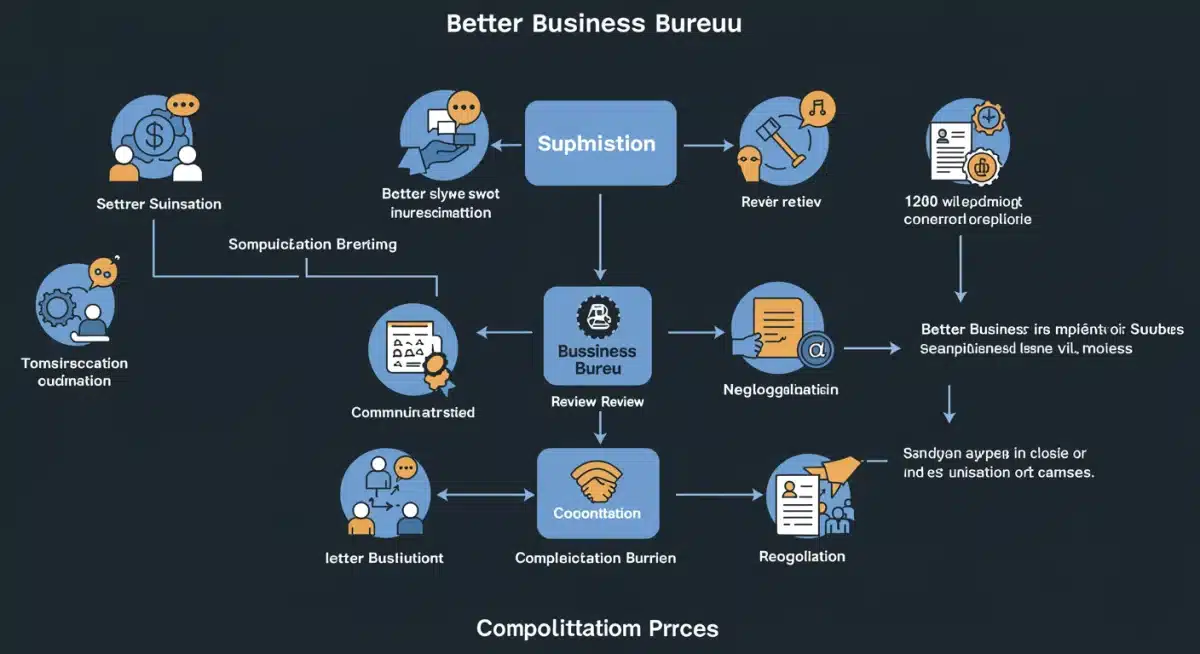
Once you’ve submitted your BBB complaint, the process typically unfolds as follows:
1. BBB Review and Forwarding
The BBB staff will review your complaint to ensure it meets their guidelines. If it does, they will forward your complaint to the business within approximately two business days. The business will be given a specific timeframe (usually 14 calendar days) to respond.
2. Business Response
The business will have the opportunity to respond to your complaint. Their response will be forwarded to you by the BBB. This response might include an offer of resolution, an explanation of their position, or a request for more information.
3. Your Rebuttal (If Necessary)
After receiving the business’s response, you will have the opportunity to review it and submit a rebuttal if you are not satisfied with their proposed resolution or if you disagree with their statements. You will typically have a limited time (e.g., 7 days) to provide your rebuttal. This is your chance to reiterate your position and explain why the business’s response is insufficient.
4. Further Negotiation and Mediation
The BBB may go back and forth between you and the business to facilitate further negotiation. Some BBBs also offer formal mediation or arbitration services, especially for more complex disputes, though these are often voluntary and may incur fees. The goal is always to find a mutually acceptable resolution.
5. Complaint Closure
The complaint will be closed under several circumstances:
- Resolved: Both parties agree to a resolution.
- Administering Resolution: A resolution has been agreed upon, and the business is in the process of fulfilling it.
- Unresolved: The business responded, but you are not satisfied, and no further negotiation is possible through the BBB.
- Unanswered: The business failed to respond to the complaint.
- Unpursuable: The BBB determines the complaint is outside its scope or cannot be pursued for other reasons.
The outcome of your complaint, including whether it was resolved or not, will be reflected in the business’s BBB profile, impacting their rating.
Tips for a Successful BBB Complaint in 2026
To maximize your chances of a positive outcome when you file a BBB complaint, consider these tips:
- Be Patient: The BBB process takes time. It’s not uncommon for a complaint to take several weeks or even months to resolve, especially if there’s a lot of back-and-forth communication.
- Maintain Professionalism: Always remain calm and professional in your communications with both the business and the BBB. Emotional outbursts or aggressive language can hinder the process.
- Be Responsive: Respond promptly to any requests for information or updates from the BBB. Delays on your part can slow down or even close your complaint.
- Keep Records: Continue to keep detailed records of all communications and actions taken throughout the BBB process.
- Be Realistic: While the BBB is a powerful tool, it’s not a guarantee of your desired outcome. Understand its limitations and be open to compromise if a reasonable solution is offered.
- Follow Up: If you don’t hear back within the expected timeframe, don’t hesitate to politely follow up with the BBB using your complaint ID.
Alternative and Complementary Dispute Resolution Avenues
While knowing how to file a BBB complaint is a valuable skill, it’s also important to be aware of other avenues for dispute resolution, especially if the BBB process doesn’t yield the desired results, or if your situation calls for a different approach:
1. State Attorney General’s Office
Your State Attorney General’s office often has a consumer protection division that handles complaints against businesses. They have investigative and enforcement powers that the BBB does not, making them a strong option for cases involving fraudulent practices or violations of state consumer protection laws.
2. Federal Trade Commission (FTC)
The FTC is the primary federal agency responsible for protecting consumers from deceptive and unfair business practices. While the FTC typically doesn’t resolve individual complaints, they use consumer complaints to identify patterns of fraud and take action against businesses on a larger scale. Reporting to the FTC helps them build cases and protect other consumers.
3. Small Claims Court
For disputes involving financial losses that fall within your state’s small claims court limits, this can be an effective legal route. Small claims courts are designed to be accessible to individuals without legal representation and can issue legally binding judgments.
4. Industry-Specific Regulators
Depending on the nature of your complaint, there might be industry-specific regulatory bodies. For example:
- Department of Transportation (DOT): For airline-related complaints.
- Federal Communications Commission (FCC): For telecommunications issues.
- Consumer Financial Protection Bureau (CFPB): For complaints about financial products and services.
- State Licensing Boards: For issues with licensed professionals (e.g., contractors, doctors).
Researching these options can provide additional leverage or a more direct path to resolution for specific types of complaints.

The Evolving Landscape of Consumer Protection in 2026
As we advance into 2026, the digital realm continues to shape consumer interactions and, consequently, consumer complaints. Online reviews, social media, and digital communication channels are more influential than ever. While the BBB remains a vital resource, consumers should also leverage these platforms strategically. A well-documented complaint, shared respectfully on social media or review sites, can sometimes prompt a quicker response from a business keen on protecting its online reputation. However, always prioritize formal processes like the BBB for structured resolution.
Furthermore, data privacy and cybersecurity concerns are increasingly intertwined with consumer disputes. If your complaint involves a data breach, identity theft, or misuse of personal information, ensure you also report these issues to relevant authorities like the FTC and consider credit monitoring services. The BBB may also be able to facilitate communication with businesses regarding these sensitive topics.
Conclusion: Empowering Your Consumer Voice
Knowing how to file a BBB complaint is a powerful tool in any US consumer’s arsenal for 2026. It provides a structured, impartial, and often effective pathway to resolving disputes with businesses. By understanding the BBB’s role, meticulously preparing your case, and navigating the complaint process with patience and professionalism, you significantly increase your chances of achieving a satisfactory outcome.
Remember that your consumer voice matters. Businesses thrive on trust, and when that trust is broken, organizations like the Better Business Bureau are there to help restore balance. Don’t hesitate to utilize this valuable resource when direct communication fails. By advocating for your rights, you not only resolve your personal issue but also contribute to a more ethical and transparent marketplace for everyone. Stay informed, stay prepared, and empower yourself with the knowledge to navigate consumer disputes effectively in the years to come.