Federal Student Aid 2026: Navigating FAFSA Simplifications, Grants, and Loans

Federal Student Aid 2026: Navigating FAFSA Simplifications, Grants, and Loans
The landscape of higher education finance is constantly evolving, and for students planning to attend college in the 2026-2027 academic year and beyond, significant changes are on the horizon. The federal government, through the Department of Education, is implementing comprehensive reforms to the Free Application for Federal Student Aid (FAFSA) process. These reforms, often referred to as FAFSA Simplification, aim to streamline the application, expand eligibility for federal student aid, and provide a more equitable system for students seeking financial assistance. Understanding these changes is crucial for maximizing your opportunities for grants, scholarships, and federal loans, ensuring you can confidently pursue your educational dreams. This extensive guide will delve into the intricacies of Federal Student Aid 2026, covering everything from the simplified FAFSA to new grant programs and loan opportunities.
The Dawn of FAFSA Simplification: What to Expect for Federal Student Aid 2026
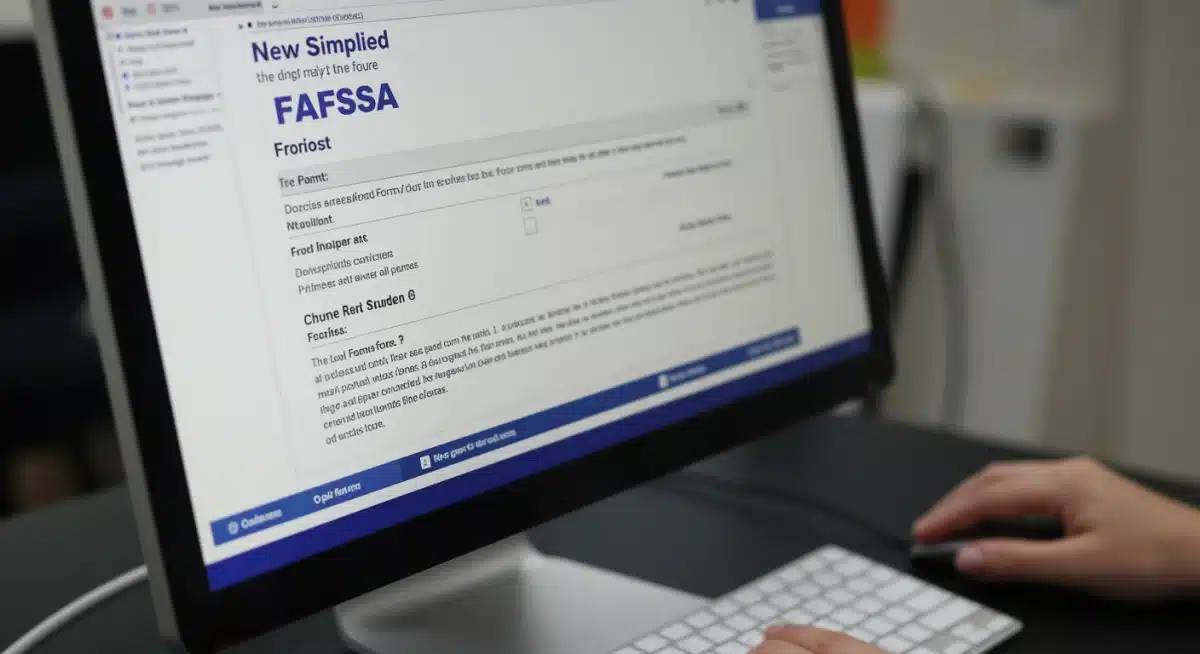
The FAFSA has long been the gateway to federal student aid, but its complexity has often been a barrier for many families. Recognizing this, Congress passed the FAFSA Simplification Act, which mandates substantial changes to the application process. While some of these changes began to roll out in the 2024-2025 aid year, the full impact will be felt in Federal Student Aid 2026. The primary goal is to make the application process easier, more intuitive, and less time-consuming for students and their families.
Key Changes to the FAFSA Form
One of the most anticipated changes is the reduction in the number of questions on the FAFSA form. Historically, the FAFSA could have over 100 questions, which was daunting for many applicants. The simplified FAFSA aims to significantly cut down on this number, focusing on essential data points. This reduction is expected to make the application more accessible, particularly for first-generation college students and those from underserved backgrounds who may lack guidance in navigating complex forms.
Another crucial change involves the terminology used. The Expected Family Contribution (EFC) is being replaced by the Student Aid Index (SAI). While both terms serve a similar purpose – to determine a student’s eligibility for need-based aid – the SAI is calculated using a revised methodology that proponents argue is more reflective of a family’s ability to pay. This new formula is designed to expand Pell Grant eligibility and provide a more accurate assessment of financial need.
Direct Data Exchange with the IRS
A major improvement for Federal Student Aid 2026 is the enhanced direct data exchange with the IRS. Previously, applicants had to manually transfer tax information using the IRS Data Retrieval Tool (DRT), which could be cumbersome and prone to errors. The new system aims for a more seamless and mandatory direct data exchange, where financial information is automatically pulled from the IRS. This not only simplifies the process but also reduces the likelihood of mistakes and the need for verification, speeding up the overall financial aid awarding timeline.
Expanded Pell Grant Eligibility
Perhaps one of the most impactful aspects of FAFSA Simplification for Federal Student Aid 2026 is the expansion of Pell Grant eligibility. The new SAI calculation will make more students eligible for Pell Grants, and some students will qualify for the maximum Pell Grant award based on their family income and family size, regardless of other factors. This is a significant boon for low-income students, as Pell Grants are a form of gift aid that does not need to be repaid. The changes are expected to bring millions of additional students into the Pell Grant program or increase the amount of aid they receive, directly addressing financial barriers to higher education.
Understanding Federal Grants: More Opportunities for Federal Student Aid 2026
Federal grants are the cornerstone of need-based financial aid, providing funds that do not have to be repaid. For students applying for Federal Student Aid 2026, understanding the various types of grants available and how the new FAFSA Simplification impacts them is vital.
Pell Grants: The Foundation of Federal Student Aid
As mentioned, Pell Grants are receiving a significant boost under the new FAFSA Simplification. These grants are awarded to undergraduate students who display exceptional financial need and have not earned a bachelor’s, graduate, or professional degree. The maximum Pell Grant amount is adjusted annually, and for Federal Student Aid 2026, more students are expected to qualify for higher amounts. To be considered for a Pell Grant, you must complete the FAFSA. Your Student Aid Index (SAI) will be the primary factor in determining your eligibility and award amount.
Federal Supplemental Educational Opportunity Grants (FSEOG)
FSEOG is another federal grant program designed for undergraduate students with exceptional financial need. Unlike Pell Grants, FSEOG funds are limited and distributed directly to colleges, which then award them to students. This means that not all eligible students will receive FSEOG, and funds are often awarded on a first-come, first-served basis. Therefore, completing your FAFSA as early as possible is crucial for Federal Student Aid 2026 to increase your chances of receiving FSEOG.
Teacher Education Assistance for College and Higher Education (TEACH) Grants
The TEACH Grant Program provides grants to students who are completing or plan to complete coursework to begin a career in teaching. In exchange for receiving a TEACH Grant, you must agree to serve as a full-time teacher in a high-need field in a low-income school for at least four academic years within eight years of completing your program of study. If you fail to meet this service obligation, the grant converts into a Federal Direct Unsubsidized Loan, which you must repay with interest. Students interested in pursuing a teaching career should explore this option when considering Federal Student Aid 2026.
Iraq and Afghanistan Service Grants
These grants are available to students who are not Pell Grant eligible but whose parent or guardian died as a result of military service in Iraq or Afghanistan after September 11, 2001. The student must have been under 24 years old or enrolled at least part-time in college at the time of the parent’s or guardian’s death. This grant provides valuable support for the children of fallen service members.
Navigating Federal Loans: Responsible Borrowing with Federal Student Aid 2026
While grants are ideal because they don’t need to be repaid, federal student loans offer another critical avenue for funding your education. Federal loans typically come with more favorable terms than private loans, including fixed interest rates, income-driven repayment plans, and opportunities for loan forgiveness in certain professions. Understanding your options for Federal Student Aid 2026 is key to responsible borrowing.
Direct Subsidized Loans
Direct Subsidized Loans are available to undergraduate students with demonstrated financial need. The major benefit of these loans is that the U.S. Department of Education pays the interest while you are in school at least half-time, during your grace period (typically six months after you leave school), and during periods of deferment. This makes them a highly attractive option for students with financial need, as it reduces the overall cost of borrowing.
Direct Unsubsidized Loans
Direct Unsubsidized Loans are available to both undergraduate and graduate students, regardless of financial need. Unlike subsidized loans, you are responsible for paying the interest on an unsubsidized loan during all periods. If you choose not to pay the interest while you’re in school or during grace periods and deferment periods, the interest will accrue and be capitalized (added to the principal amount of your loan). While interest accrues, these loans still offer the benefits of federal loans, such as flexible repayment options.
Direct PLUS Loans (Parent PLUS and Grad PLUS)
Direct PLUS Loans are federal loans that graduate or professional students and parents of dependent undergraduate students can use to help pay for education expenses not covered by other financial aid. Eligibility for PLUS loans is not based on financial need, but a credit check is required. If a parent has an adverse credit history, they may still be able to receive a PLUS loan by meeting additional requirements, such as obtaining an endorser or documenting extenuating circumstances. Grad PLUS loans are for graduate students, while Parent PLUS loans are for parents of undergraduates.
Perkins Loans (Phased Out, but Still Relevant for Some)
It’s important to note that the Federal Perkins Loan Program officially ended in 2017. While new Perkins Loans are no longer being disbursed, students who previously received them are still responsible for repayment, and the terms and conditions of those loans remain in effect. If you have existing Perkins Loans, make sure you understand your repayment obligations and options.
Beyond Federal Aid: Scholarships and Other Funding for Federal Student Aid 2026
While Federal Student Aid 2026, driven by FAFSA Simplification, is a powerful tool, it’s essential to remember that it’s just one piece of the financial aid puzzle. Scholarships, institutional aid, and state-specific programs can significantly reduce your out-of-pocket costs.
Scholarships: Free Money for Your Education
Scholarships are essentially free money that you don’t have to repay. They come from a wide variety of sources, including colleges and universities, private organizations, foundations, and even individuals. Scholarships can be merit-based (awarded for academic achievement, talent, or leadership) or need-based (awarded based on financial circumstances). There are also scholarships for specific demographics, fields of study, or extracurricular activities. Actively searching and applying for scholarships should be a continuous process throughout your college application journey.
Institutional Aid
Many colleges and universities offer their own financial aid programs, often referred to as institutional aid. This can include grants, scholarships, and even institutional loans. The amount and type of institutional aid vary widely by school, often depending on the institution’s endowment and its financial aid policies. To be considered for institutional aid, you typically need to complete the FAFSA, and some private institutions may also require the CSS Profile, which provides a more detailed look at your family’s financial situation.
State-Specific Aid Programs
In addition to federal and institutional aid, many states offer their own grant and scholarship programs for residents attending in-state colleges or universities. These programs often have specific eligibility requirements, such as residency, academic performance, or enrollment in particular fields of study. It’s crucial to research your state’s higher education agency website to understand what financial aid opportunities are available to you as part of your Federal Student Aid 2026 planning.
Who is Eligible for Federal Student Aid 2026?
Eligibility for Federal Student Aid 2026 generally requires meeting several fundamental criteria:
- U.S. Citizenship or Eligible Non-Citizen Status: You must be a U.S. citizen or an eligible non-citizen with a valid Social Security number.
- High School Diploma or GED: You must have a high school diploma or its recognized equivalent (such as a GED certificate).
- Enrollment in an Eligible Program: You must be enrolled or accepted for enrollment as a regular student in an eligible degree or certificate program at a school that participates in federal student aid programs.
- Satisfactory Academic Progress (SAP): Once enrolled, you must maintain satisfactory academic progress as defined by your school.
- Not in Default on Federal Student Loans: You cannot be in default on any federal student loan or owe a refund on a federal grant.
- Selective Service Registration (for males): Males between the ages of 18 and 25 must be registered with the Selective Service System.
The FAFSA Simplification Act aims to make aid more accessible by adjusting some of the criteria, particularly regarding the SAI, which directly impacts need-based aid eligibility.
When to Apply for Federal Student Aid 2026
The FAFSA for the 2026-2027 academic year typically becomes available on October 1st of the preceding year (i.e., October 1, 2025). However, due to the FAFSA Simplification rollout, recent years have seen delays. While the goal is to return to the October 1st launch, it’s always wise to check the Federal Student Aid website for the most up-to-date information on the FAFSA opening date for Federal Student Aid 2026. Regardless of the exact opening date, applying as early as possible is highly recommended. Many financial aid programs, especially campus-based aid like FSEOG, are awarded on a first-come, first-served basis until funds are depleted.

Tips for Maximizing Your Federal Student Aid 2026
Navigating the financial aid process can feel overwhelming, but with a strategic approach, you can maximize your opportunities for Federal Student Aid 2026. Here are some key tips:
1. Complete the FAFSA Early and Accurately
This cannot be stressed enough. As soon as the FAFSA for Federal Student Aid 2026 becomes available, complete it. Early submission increases your chances for limited campus-based aid. Take your time to ensure all information is accurate to avoid delays and potential errors that could affect your aid eligibility. Utilize the direct data exchange with the IRS to minimize manual entry mistakes.
2. Understand the Student Aid Index (SAI)
Familiarize yourself with how the new Student Aid Index (SAI) is calculated. While you don’t need to be an expert, knowing the factors that influence your SAI can help you understand your aid eligibility better. The SAI replaces the EFC and is designed to be a more equitable measure of your family’s ability to contribute to college costs.
3. Research All Grant and Scholarship Opportunities
Don’t stop at federal aid. Explore every avenue for grants and scholarships. Check with your high school counselor, college financial aid offices, community organizations, and online scholarship search engines. Be diligent in your search; even small scholarships can add up.
4. Communicate with Financial Aid Offices
If you have questions about your financial aid package for Federal Student Aid 2026 or if your family’s financial situation changes significantly after you apply (e.g., job loss, medical expenses), contact the financial aid office at your prospective schools. They may be able to make adjustments to your aid package based on special circumstances.
5. Borrow Responsibly
If loans are necessary, always prioritize federal loans over private loans due to their more favorable terms and borrower protections. Only borrow what you truly need, and understand the repayment terms and interest rates before accepting any loan. Create a budget to manage your educational expenses and minimize your reliance on loans.
6. Maintain Satisfactory Academic Progress (SAP)
To continue receiving Federal Student Aid 2026 throughout your college career, you must meet your school’s Satisfactory Academic Progress (SAP) requirements. This typically involves maintaining a certain GPA and completing a minimum number of credits each term. Failing to meet SAP can result in the loss of federal aid eligibility.
7. Reapply Every Year
Federal student aid is not a one-time application. You must reapply for Federal Student Aid 2026 (and subsequent years) by submitting a new FAFSA each academic year you wish to receive aid. Your financial situation can change, and so can your aid eligibility.
The Long-Term Impact of FAFSA Simplification on Federal Student Aid 2026 and Beyond
The changes brought by FAFSA Simplification are not merely procedural; they represent a significant shift in how the federal government approaches student financial aid. The goal is to create a more inclusive and accessible system, ensuring that financial barriers do not prevent deserving students from pursuing higher education. For Federal Student Aid 2026, this means:
- Increased Access: More students, particularly those from low-income backgrounds, will likely qualify for federal grants, reducing the need for loans.
- Reduced Administrative Burden: A simpler FAFSA means less stress and fewer hurdles for families, allowing them to focus on college selection and preparation.
- Greater Equity: The new SAI calculation aims to provide a fairer assessment of a family’s ability to pay, leading to more equitable distribution of aid.
- Improved Efficiency: Direct data exchange with the IRS will streamline the application and verification process, leading to faster aid notifications.
These reforms are designed to have a lasting positive impact on college affordability and access, encouraging more individuals to pursue post-secondary education and contribute to the workforce.
Conclusion: Preparing for Your Educational Journey with Federal Student Aid 2026
The arrival of Federal Student Aid 2026 marks a new era in financing higher education. With the FAFSA Simplification reforms, students and families can look forward to a more straightforward application process and expanded opportunities for financial assistance. By understanding the key changes, actively applying for all available grants and scholarships, and responsibly managing any necessary loans, you can build a solid financial foundation for your academic journey.
Remember to stay informed by regularly visiting the official Federal Student Aid website (studentaid.gov) for the latest updates and resources. Proactive planning and diligent application will be your best allies in securing the financial aid you need to achieve your educational goals. Embrace these changes, and step confidently into your future knowing that Federal Student Aid 2026 is designed to support your success.