2026 Skills Gap: 5 High-Demand Certifications for U.S. Career Advancement

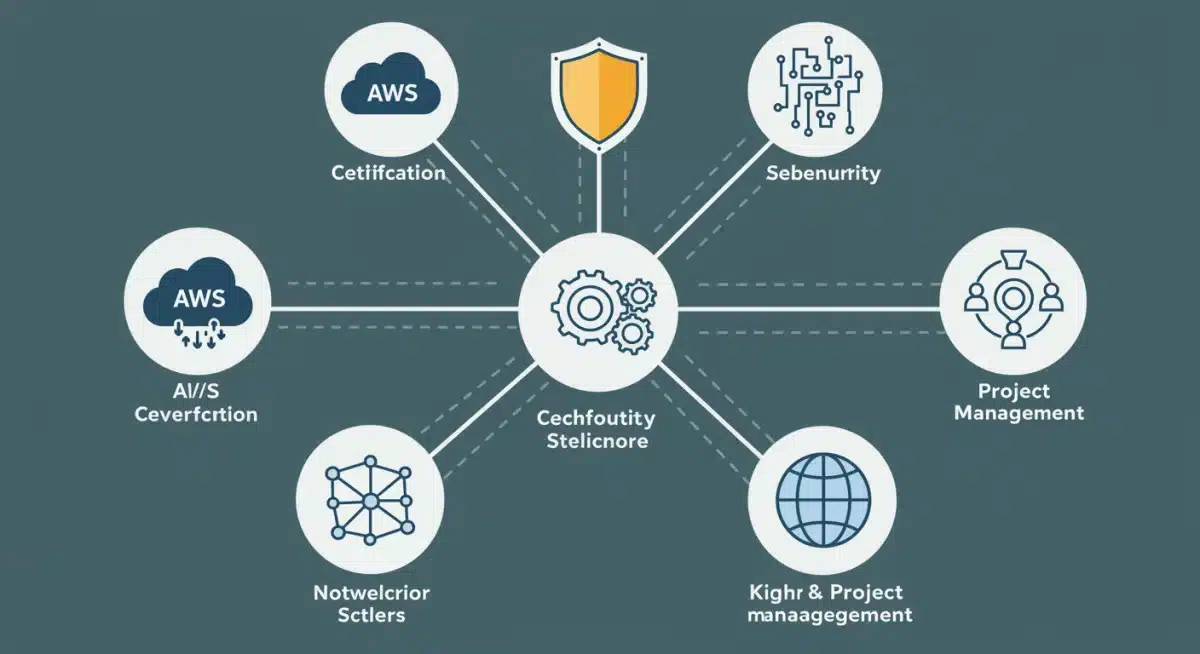
The 2026 skills gap in the U.S. demands strategic upskilling; high-demand certifications offer immediate career advancement by equipping professionals with critical, future-proof expertise.
Are you ready to navigate the future of work? As 2026 approaches, the U.S. job market faces a significant 2026 skills gap, making specialized certifications more crucial than ever for immediate career advancement. This article will explore the top five high-demand certifications poised to equip you with the expertise employers are actively seeking.
Understanding the Evolving U.S. Job Market and the Skills Gap
The U.S. job market is undergoing a profound transformation, driven by rapid technological advancements, globalization, and shifting economic priorities. This evolution has created a discernible gap between the skills workers possess and the skills employers desperately need. Understanding this dynamic is the first step toward strategic career planning.
Automation, artificial intelligence, and data analytics are not just buzzwords; they are foundational elements reshaping industries from manufacturing to healthcare. This new landscape demands a workforce that is not only adaptable but also equipped with specific, cutting-edge technical and soft skills. Failure to address this gap can lead to significant economic inefficiencies and individual career stagnation.
The Drivers of Change
Several key factors are accelerating the skills gap, making it a critical consideration for professionals across all sectors.
- Technological Disruption: The pervasive integration of AI, machine learning, and automation tools requires new proficiencies in areas like data science, cloud computing, and cybersecurity.
- Digital Transformation: Businesses are increasingly digitizing their operations, necessitating employees who can manage and leverage digital platforms effectively.
- Global Competition: The interconnected global economy demands a workforce that can innovate and adapt quickly to international standards and challenges.
- Changing Work Models: The rise of remote and hybrid work environments requires enhanced digital collaboration and project management skills.
The implications for individuals are clear: continuous learning is no longer optional but a necessity. Those who proactively acquire relevant certifications will be best positioned to thrive in the competitive landscape of 2026 and beyond. This proactive approach ensures not just job security, but also opportunities for significant career growth and leadership roles.
Cloud Computing Certifications: The Foundation of Future IT
Cloud computing has moved from an emerging technology to the backbone of modern enterprise IT infrastructure. As businesses continue their migration to the cloud, the demand for skilled professionals who can design, deploy, and manage cloud solutions is skyrocketing. This makes cloud certifications incredibly valuable for anyone aiming for immediate career advancement.
These certifications validate expertise across various cloud platforms, such as Amazon Web Services (AWS), Microsoft Azure, and Google Cloud Platform (GCP). They cover essential areas like infrastructure as a service (IaaS), platform as a service (PaaS), and software as a service (SaaS), ensuring professionals are well-versed in scalable and secure cloud environments.
Why Cloud Expertise is Non-Negotiable
The shift to cloud-native architectures and hybrid cloud models is creating an insatiable demand for specialists. Companies need individuals who can optimize costs, enhance security, and ensure the reliability of their cloud operations.
- AWS Certified Solutions Architect – Associate: This certification is highly sought after, validating a professional’s ability to design distributed systems on AWS. It’s an excellent entry point for architects and engineers.
- Microsoft Certified: Azure Administrator Associate: Focuses on implementing, managing, and monitoring identity, governance, storage, compute, and virtual networks in a cloud environment. Essential for Azure-centric organizations.
- Google Cloud Certified – Professional Cloud Architect: This advanced certification demonstrates expertise in designing, developing, and managing robust, secure, scalable, highly available, and dynamic solutions to drive business objectives on Google Cloud.
Investing in a cloud computing certification can open doors to roles such as Cloud Architect, Cloud Engineer, and DevOps Specialist, all of which command high salaries and offer significant growth potential. The foundational knowledge gained is applicable across various industries, making it a versatile skill set.
Cybersecurity Certifications: Protecting the Digital Frontier
With an increasing number of cyber threats and stringent data privacy regulations, cybersecurity professionals are on the front lines of protecting digital assets. The skills gap in this field is particularly acute, making cybersecurity certifications a golden ticket for career advancement in the U.S. job market.
These certifications validate a professional’s ability to identify vulnerabilities, prevent attacks, respond to incidents, and maintain robust security postures. They cover a broad spectrum, from network security and ethical hacking to security operations and governance, risk, and compliance (GRC).
Top Certifications for Cybersecurity Prowess
Employers are actively seeking individuals who can demonstrate practical skills and theoretical knowledge in defending against sophisticated cyber adversities. Certifications provide that verifiable proof of expertise.
- CompTIA Security+: A foundational certification that validates the core skills necessary for any cybersecurity role. It covers threat management, risk management, and cryptography.
- Certified Information Systems Security Professional (CISSP): This advanced certification is highly respected and often required for senior-level security roles. It covers eight domains of information security.
- Certified Ethical Hacker (CEH): Focuses on penetration testing and ethical hacking techniques, teaching professionals how to think like an attacker to better defend systems.
A cybersecurity certification not only enhances your technical capabilities but also demonstrates your commitment to continuous learning in a rapidly evolving threat landscape. Roles like Security Analyst, Security Engineer, and Chief Information Security Officer (CISO) are in high demand and offer substantial career trajectories.
Data Science and Analytics Certifications: Unlocking Insights
In an increasingly data-driven world, the ability to collect, analyze, and interpret vast amounts of information is a critical business advantage. Data science and analytics certifications are essential for professionals looking to contribute meaningfully to strategic decision-making and gain immediate career advancement.
These certifications often cover statistical analysis, machine learning algorithms, data visualization, and programming languages like Python and R. They equip individuals with the skills to transform raw data into actionable insights, driving innovation and efficiency across industries.
The Power of Data-Driven Decisions
Companies are eager to hire professionals who can harness the power of data to understand customer behavior, optimize operations, and predict future trends. The demand for these skills far outstrips the current supply.
- Certified Analytics Professional (CAP): A vendor-neutral certification that validates a professional’s ability to transform complex data into valuable insights and actions.
- IBM Data Science Professional Certificate: Offered through Coursera, this program covers a wide range of data science topics, including Python programming, SQL, data analysis, and machine learning.
- Microsoft Certified: Azure Data Scientist Associate: Focuses on applying machine learning to implement and run machine learning workloads on Azure.
With a data science or analytics certification, you can pursue roles such as Data Scientist, Data Analyst, Business Intelligence Developer, or Machine Learning Engineer. These positions are not only high-paying but also offer intellectual challenges and the opportunity to make a tangible impact on business outcomes.
Artificial Intelligence and Machine Learning Certifications: Shaping Tomorrow
Artificial intelligence (AI) and machine learning (ML) are at the forefront of technological innovation, transforming industries and creating entirely new job categories. Certifications in these fields are becoming vital for professionals who want to lead this charge and ensure career advancement by addressing the 2026 skills gap.
These programs delve into concepts such as neural networks, deep learning, natural language processing (NLP), and computer vision. They provide the theoretical understanding and practical skills needed to develop and deploy intelligent systems that can learn from data and make autonomous decisions.
Leading the AI Revolution
The ability to work with AI and ML technologies is becoming a core competency for many advanced technical roles. Employers are prioritizing candidates who can demonstrate proficiency in these transformative areas.
- Google AI Engineer Professional Certificate: This certification prepares individuals to design, build, and operationalize AI solutions using Google Cloud technologies.
- AWS Certified Machine Learning – Specialty: Validates a professional’s ability to design, implement, deploy, and maintain ML solutions on AWS.
- Deep Learning Specialization (Coursera by Andrew Ng): While not a traditional certification, this highly respected specialization provides a comprehensive understanding of deep learning, a critical component of AI.
Obtaining an AI or ML certification can position you for roles like AI Engineer, Machine Learning Specialist, Robotics Engineer, or AI Research Scientist. These careers offer unparalleled opportunities for innovation and significant contributions to cutting-edge technology. The demand for these specialized skills will only intensify, making these certifications a smart investment.
Project Management Certifications: Driving Efficiency and Innovation
Even with advanced technical skills, successful project execution requires strong leadership and organizational capabilities. Project management certifications are consistently in high demand, enabling professionals to streamline processes, manage resources effectively, and deliver complex projects on time and within budget, thereby securing career advancement.
These certifications cover methodologies like Agile, Scrum, and Waterfall, along with essential soft skills such as communication, negotiation, and risk management. They are applicable across virtually all industries, making them highly versatile for professionals seeking to lead teams and initiatives.
The Indispensable Role of Project Leadership
Organizations rely on skilled project managers to translate strategic visions into tangible results. The ability to manage projects effectively is a critical skill that directly impacts a company’s bottom line and competitive edge.
- Project Management Professional (PMP): The gold standard in project management, recognized globally. It validates extensive experience and expertise in leading and directing projects.
- Certified ScrumMaster (CSM): Focuses on the Scrum framework, an Agile methodology popular in software development and other fast-paced environments.
- PRINCE2 Foundation/Practitioner: A widely used project management methodology, particularly popular in Europe but gaining traction in the U.S. for its structured approach.
A project management certification can lead to roles such as Project Manager, Program Manager, Portfolio Manager, or Scrum Master. These positions are crucial for organizational success and offer opportunities to influence strategic direction and drive innovation. The skills learned are transferable and valuable in any professional context.
| Key Certification Area | Career Impact |
|---|---|
| Cloud Computing | Essential for IT infrastructure, high demand for architects and engineers. |
| Cybersecurity | Critical for protecting digital assets, leading to analyst and engineer roles. |
| Data Science & Analytics | Transforms data into insights, vital for data scientists and analysts. |
| AI & Machine Learning | Drives innovation, opens doors to AI/ML engineer and research positions. |
Frequently Asked Questions About 2026 Skills Gap Certifications
The 2026 skills gap is a major concern because technological advancements are rapidly changing job requirements. Without acquiring new, in-demand skills, professionals risk career stagnation, while businesses struggle to find qualified talent, impacting economic growth and competitiveness.
Certifications provide structured learning paths and validated proof of expertise in specific, high-demand areas. They equip professionals with the practical skills employers need, making them more competitive for immediate career advancement and new opportunities in specialized fields.
While many high-demand certifications have an IT focus, skills like data analytics, AI, and project management are increasingly relevant across all industries. Professionals in healthcare, finance, marketing, and more can benefit significantly from these specialized qualifications.
The duration varies significantly based on the certification and prior experience. Foundational certifications might take a few weeks to months of dedicated study, while advanced ones like CISSP or PMP can require several months to a year of preparation, including prerequisite experience.
The return on investment is often substantial, including higher earning potential, increased job security, and access to more senior roles. Many certified professionals report significant salary increases and greater career satisfaction due to enhanced skills and opportunities.
Conclusion
The 2026 skills gap presents both a challenge and a monumental opportunity for professionals in the U.S. job market. By strategically investing in high-demand certifications in areas like cloud computing, cybersecurity, data science, AI/ML, and project management, individuals can not only future-proof their careers but also achieve immediate and significant career advancement. These credentials are more than just pieces of paper; they are passports to a thriving professional future, equipping you with the expertise to lead in an ever-evolving world.